

ITT2538
ITT2538
ITT2538
from
$424.00
Price in reward points: 424
- Catalog: ITT2538
- Gene/Protein: LAT
- Product Description: Immunotag™ LAT Polyclonal Antibody
-
Description
-
Specifications
Antibody Specification Datasheet 
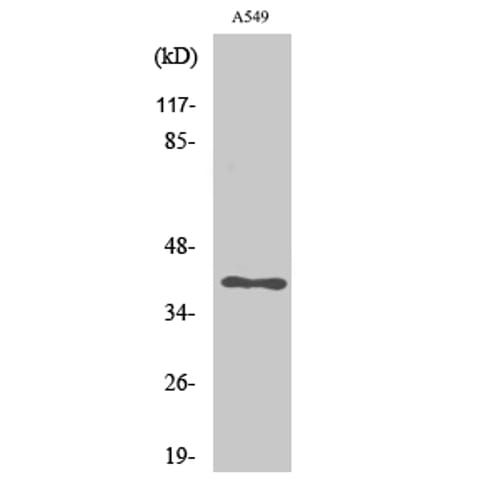
IMPORTANT NOTE This product is custom manufactured with a lead time of 3-4 weeks. Once in production, this item cannot be cancelled from an order and is not eligible for return. Target Protein LAT Clonality Polyclonal Storage/Stability -20°C/1 year Application WB,ELISA Recommended Dilution Western Blot: 1/500 - 1/2000. ELISA: 1/20000. Not yet tested in other applications. Concentration 1 mg/ml Reactive Species Human,Mouse,Rat Host Species Rabbit Immunogen Synthesized peptide derived from LAT, at AA range: 140-220 Specificity LAT Polyclonal Antibody detects endogenous levels of LAT protein. Purification The antibody was affinity-purified from rabbit antiserum by affinity-chromatography using epitope-specific immunogen Form Liquid in PBS containing 50% glycerol, 0.5% BSA and 0.02% sodium azide. Gene Name LAT Accession No. O43561 O54957 O70601 Alternate Names LAT; Linker for activation of T-cells family member 1; 36 kDa phospho-tyrosine adapter protein; pp36; p36-38 Description linker for activation of T-cells(LAT) Homo sapiens The protein encoded by this gene is phosphorylated by ZAP-70/Syk protein tyrosine kinases following activation of the T-cell antigen receptor (TCR) signal transduction pathway. This transmembrane protein localizes to lipid rafts and acts as a docking site for SH2 domain-containing proteins. Upon phosphorylation, this protein recruits multiple adaptor proteins and downstream signaling molecules into multimolecular signaling complexes located near the site of TCR engagement. Alternative splicing results in multiple transcript variants encoding different isoforms. [provided by RefSeq, Jul 2008], Cell Pathway/ Category Natural killer cell mediated cytotoxicity,T_Cell_Receptor,Fc epsilon RI,Fc gamma R-mediated phagocytosis, Protein Expression Colon,Leukemia,Platelet,Thymus, Subcellular Localization immunological synapse,plasma membrane,cell-cell junction,COP9 signalosome,membrane,integral component of membrane,mast cell granule,membrane raft, Protein Function function:Required for TCR (T-cell antigen receptor)- and pre-TCR-mediated signaling, both in mature T-cells and during their development. Involved in FCGR3 (low affinity immunoglobulin gamma Fc region receptor III)-mediated signaling in natural killer cells and FCER1 (high affinity immunoglobulin epsilon receptor)-mediated signaling in mast cells. Couples activation of these receptors and their associated kinases with distal intracellular events such as mobilization of intracellular calcium stores, PKC activation, MAPK activation or cytoskeletal reorganization through the recruitment of PLCG1, GRB2, GRAP2, and other signaling molecules.,miscellaneous:Engagement of killer inhibitory receptors (KIR) disrupts the interaction of PLCG1 with LAT and blocks target cell-induced activation of PLC, maybe by inducing the dephosphorylation of LAT.,PTM:Palmitoylation of Cys-26 and Cys-29 is required for raft targeting and efficient phosphorylation.,PTM:Phosphorylated on tyrosines by ZAP-70 upon TCR activation, or by SYK upon other immunoreceptor activation; which leads to the recruitment of multiple signaling molecules. Is one of the most prominently tyrosine-phosphorylated proteins detected following TCR engagement.,subcellular location:Present in lipid rafts.,subunit:When phosphorylated, interacts directly with the PIK3R1 subunit of phosphoinositide 3-kinase and the SH2 domains of GRB2, GRAP, GRAP2, PLCG1 and PLCG2. Interacts indirectly with CBL, SOS, VAV, and LCP2. Interacts with SHB, SKAP2 and CLNK (By similarity). Interacts with FCGR1A.,tissue specificity:Expressed in thymus, T-cells, NK cells, mast cells and, at lower levels, in spleen. Present in T-cells but not B-cells (at protein level)., Usage For Research Use Only! Not for diagnostic or therapeutic procedures. - Reviews
| Antibody Specification | |
| Datasheet | |
| IMPORTANT NOTE | This product is custom manufactured with a lead time of 3-4 weeks. Once in production, this item cannot be cancelled from an order and is not eligible for return. |
| Target Protein | LAT |
| Clonality | Polyclonal |
| Storage/Stability | -20°C/1 year |
| Application | WB,ELISA |
| Recommended Dilution | Western Blot: 1/500 - 1/2000. ELISA: 1/20000. Not yet tested in other applications. |
| Concentration | 1 mg/ml |
| Reactive Species | Human,Mouse,Rat |
| Host Species | Rabbit |
| Immunogen | Synthesized peptide derived from LAT, at AA range: 140-220 |
| Specificity | LAT Polyclonal Antibody detects endogenous levels of LAT protein. |
| Purification | The antibody was affinity-purified from rabbit antiserum by affinity-chromatography using epitope-specific immunogen |
| Form | Liquid in PBS containing 50% glycerol, 0.5% BSA and 0.02% sodium azide. |
| Gene Name | LAT |
| Accession No. | O43561 O54957 O70601 |
| Alternate Names | LAT; Linker for activation of T-cells family member 1; 36 kDa phospho-tyrosine adapter protein; pp36; p36-38 |
| Description | linker for activation of T-cells(LAT) Homo sapiens The protein encoded by this gene is phosphorylated by ZAP-70/Syk protein tyrosine kinases following activation of the T-cell antigen receptor (TCR) signal transduction pathway. This transmembrane protein localizes to lipid rafts and acts as a docking site for SH2 domain-containing proteins. Upon phosphorylation, this protein recruits multiple adaptor proteins and downstream signaling molecules into multimolecular signaling complexes located near the site of TCR engagement. Alternative splicing results in multiple transcript variants encoding different isoforms. [provided by RefSeq, Jul 2008], |
| Cell Pathway/ Category | Natural killer cell mediated cytotoxicity,T_Cell_Receptor,Fc epsilon RI,Fc gamma R-mediated phagocytosis, |
| Protein Expression | Colon,Leukemia,Platelet,Thymus, |
| Subcellular Localization | immunological synapse,plasma membrane,cell-cell junction,COP9 signalosome,membrane,integral component of membrane,mast cell granule,membrane raft, |
| Protein Function | function:Required for TCR (T-cell antigen receptor)- and pre-TCR-mediated signaling, both in mature T-cells and during their development. Involved in FCGR3 (low affinity immunoglobulin gamma Fc region receptor III)-mediated signaling in natural killer cells and FCER1 (high affinity immunoglobulin epsilon receptor)-mediated signaling in mast cells. Couples activation of these receptors and their associated kinases with distal intracellular events such as mobilization of intracellular calcium stores, PKC activation, MAPK activation or cytoskeletal reorganization through the recruitment of PLCG1, GRB2, GRAP2, and other signaling molecules.,miscellaneous:Engagement of killer inhibitory receptors (KIR) disrupts the interaction of PLCG1 with LAT and blocks target cell-induced activation of PLC, maybe by inducing the dephosphorylation of LAT.,PTM:Palmitoylation of Cys-26 and Cys-29 is required for raft targeting and efficient phosphorylation.,PTM:Phosphorylated on tyrosines by ZAP-70 upon TCR activation, or by SYK upon other immunoreceptor activation; which leads to the recruitment of multiple signaling molecules. Is one of the most prominently tyrosine-phosphorylated proteins detected following TCR engagement.,subcellular location:Present in lipid rafts.,subunit:When phosphorylated, interacts directly with the PIK3R1 subunit of phosphoinositide 3-kinase and the SH2 domains of GRB2, GRAP, GRAP2, PLCG1 and PLCG2. Interacts indirectly with CBL, SOS, VAV, and LCP2. Interacts with SHB, SKAP2 and CLNK (By similarity). Interacts with FCGR1A.,tissue specificity:Expressed in thymus, T-cells, NK cells, mast cells and, at lower levels, in spleen. Present in T-cells but not B-cells (at protein level)., |
| Usage | For Research Use Only! Not for diagnostic or therapeutic procedures. |