

ITT2620
ITT2620
ITT2620
from
$424.00
Price in reward points: 424
- Catalog: ITT2620
- Gene/Protein: MADD
- Product Description: Immunotag™ MADD Polyclonal Antibody
-
Description
-
Specifications
Antibody Specification Datasheet 
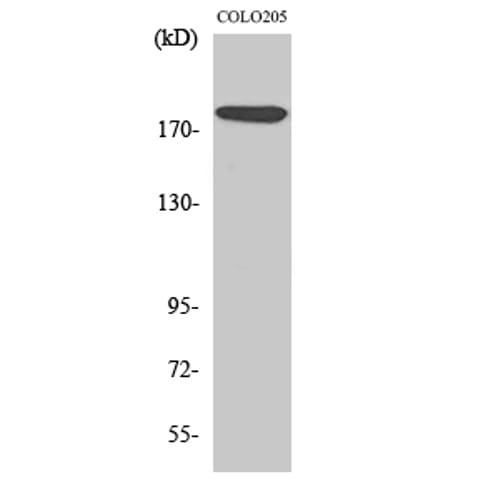
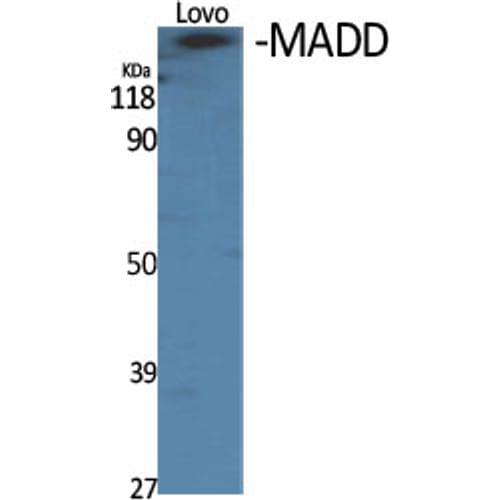
IMPORTANT NOTE This product is custom manufactured with a lead time of 3-4 weeks. Once in production, this item cannot be cancelled from an order and is not eligible for return. Target Protein MADD Clonality Polyclonal Storage/Stability -20°C/1 year Application WB,IHC-p,IF,ELISA Recommended Dilution Western Blot: 1/500 - 1/2000. Immunohistochemistry: 1/100 - 1/300. Immunofluorescence: 1/200 - 1/1000. ELISA: 1/5000. Not yet tested in other applications. Concentration 1 mg/ml Reactive Species Human,Mouse,Rat Host Species Rabbit Immunogen Synthesized peptide derived from MADD, at AA range: 720-800 Specificity MADD Polyclonal Antibody detects endogenous levels of MADD protein. Purification The antibody was affinity-purified from rabbit antiserum by affinity-chromatography using epitope-specific immunogen Form Liquid in PBS containing 50% glycerol, 0.5% BSA and 0.02% sodium azide. Gene Name MADD Accession No. Q8WXG6 Q80U28 O08873 Alternate Names MADD; DENN; IG20; KIAA0358; MAP kinase-activating death domain protein; Differentially expressed in normal and neoplastic cells; Insulinoma glucagonoma clone 20; Rab3 GDP/GTP exchange factor Description MAP kinase activating death domain(MADD) Homo sapiens Tumor necrosis factor alpha (TNF-alpha) is a signaling molecule that interacts with one of two receptors on cells targeted for apoptosis. The apoptotic signal is transduced inside these cells by cytoplasmic adaptor proteins. The protein encoded by this gene is a death domain-containing adaptor protein that interacts with the death domain of TNF-alpha receptor 1 to activate mitogen-activated protein kinase (MAPK) and propagate the apoptotic signal. It is membrane-bound and expressed at a higher level in neoplastic cells than in normal cells. Several transcript variants encoding different isoforms have been described for this gene. [provided by RefSeq, Jul 2008], Protein Expression Brain,Fetal liver,Insulinoma,Liver,Testis, Subcellular Localization cytoplasm,cytosol,plasma membrane,integral component of membrane, Protein Function caution:The sequence shown here is derived from an Ensembl automatic analysis pipeline and should be considered as preliminary data.,function:Plays a significant role in regulating cell proliferation, survival and death through alternative mRNA splicing. Isoform 5 shows increased cell proliferation and isoform 2 shows decreased. Converts GDP-bound inactive form of RAB3A, RAB3C and RAB3D to the GTP-bound active forms. Component of the TNFRSF1A signaling complex: MADD links TNFRSF1A with MAP kinase activation. Plays an important regulatory role in physiological cell death (TNF-alpha-induced, caspase-mediated apoptosis); isoform 1 is susceptible to inducing apoptosis, isoform 5 is resistant and isoform 3 and isoform 4 have no effect.,miscellaneous:Overexpression of MADD activates the mitogen-activated protein (MAP) kinase extracellular signal-regulated kinase (ERK). Expression of the MADD death domain stimulates both the ERK and c-JUN N-terminal kinase MAP kinases and induces the phosphorylation of cytosolic phospholipase A2.,similarity:Belongs to the MADD family.,similarity:Contains 1 dDENN domain.,similarity:Contains 1 death domain.,similarity:Contains 1 DENN domain.,similarity:Contains 1 uDENN domain.,subunit:Interacts with the death domain of TNFRSF1A through its own death domain.,tissue specificity:Highly expressed in fetal brain and kidney; adult testis, ovary, brain and heart. Isoform 5 is constitutively expressed in all tissues. Isoform 7 is expressed in fetal liver and in several cancer cell lines., Usage For Research Use Only! Not for diagnostic or therapeutic procedures. - Reviews
| Antibody Specification | |
| Datasheet | |
| IMPORTANT NOTE | This product is custom manufactured with a lead time of 3-4 weeks. Once in production, this item cannot be cancelled from an order and is not eligible for return. |
| Target Protein | MADD |
| Clonality | Polyclonal |
| Storage/Stability | -20°C/1 year |
| Application | WB,IHC-p,IF,ELISA |
| Recommended Dilution | Western Blot: 1/500 - 1/2000. Immunohistochemistry: 1/100 - 1/300. Immunofluorescence: 1/200 - 1/1000. ELISA: 1/5000. Not yet tested in other applications. |
| Concentration | 1 mg/ml |
| Reactive Species | Human,Mouse,Rat |
| Host Species | Rabbit |
| Immunogen | Synthesized peptide derived from MADD, at AA range: 720-800 |
| Specificity | MADD Polyclonal Antibody detects endogenous levels of MADD protein. |
| Purification | The antibody was affinity-purified from rabbit antiserum by affinity-chromatography using epitope-specific immunogen |
| Form | Liquid in PBS containing 50% glycerol, 0.5% BSA and 0.02% sodium azide. |
| Gene Name | MADD |
| Accession No. | Q8WXG6 Q80U28 O08873 |
| Alternate Names | MADD; DENN; IG20; KIAA0358; MAP kinase-activating death domain protein; Differentially expressed in normal and neoplastic cells; Insulinoma glucagonoma clone 20; Rab3 GDP/GTP exchange factor |
| Description | MAP kinase activating death domain(MADD) Homo sapiens Tumor necrosis factor alpha (TNF-alpha) is a signaling molecule that interacts with one of two receptors on cells targeted for apoptosis. The apoptotic signal is transduced inside these cells by cytoplasmic adaptor proteins. The protein encoded by this gene is a death domain-containing adaptor protein that interacts with the death domain of TNF-alpha receptor 1 to activate mitogen-activated protein kinase (MAPK) and propagate the apoptotic signal. It is membrane-bound and expressed at a higher level in neoplastic cells than in normal cells. Several transcript variants encoding different isoforms have been described for this gene. [provided by RefSeq, Jul 2008], |
| Protein Expression | Brain,Fetal liver,Insulinoma,Liver,Testis, |
| Subcellular Localization | cytoplasm,cytosol,plasma membrane,integral component of membrane, |
| Protein Function | caution:The sequence shown here is derived from an Ensembl automatic analysis pipeline and should be considered as preliminary data.,function:Plays a significant role in regulating cell proliferation, survival and death through alternative mRNA splicing. Isoform 5 shows increased cell proliferation and isoform 2 shows decreased. Converts GDP-bound inactive form of RAB3A, RAB3C and RAB3D to the GTP-bound active forms. Component of the TNFRSF1A signaling complex: MADD links TNFRSF1A with MAP kinase activation. Plays an important regulatory role in physiological cell death (TNF-alpha-induced, caspase-mediated apoptosis); isoform 1 is susceptible to inducing apoptosis, isoform 5 is resistant and isoform 3 and isoform 4 have no effect.,miscellaneous:Overexpression of MADD activates the mitogen-activated protein (MAP) kinase extracellular signal-regulated kinase (ERK). Expression of the MADD death domain stimulates both the ERK and c-JUN N-terminal kinase MAP kinases and induces the phosphorylation of cytosolic phospholipase A2.,similarity:Belongs to the MADD family.,similarity:Contains 1 dDENN domain.,similarity:Contains 1 death domain.,similarity:Contains 1 DENN domain.,similarity:Contains 1 uDENN domain.,subunit:Interacts with the death domain of TNFRSF1A through its own death domain.,tissue specificity:Highly expressed in fetal brain and kidney; adult testis, ovary, brain and heart. Isoform 5 is constitutively expressed in all tissues. Isoform 7 is expressed in fetal liver and in several cancer cell lines., |
| Usage | For Research Use Only! Not for diagnostic or therapeutic procedures. |