

ITT2737
ITT2737
ITT2737
from
$424.00
Price in reward points: 424
- Catalog: ITT2737
- Gene/Protein: MET
- Product Description: Immunotag™ Met Polyclonal Antibody
-
Description
-
Specifications
Antibody Specification Datasheet 
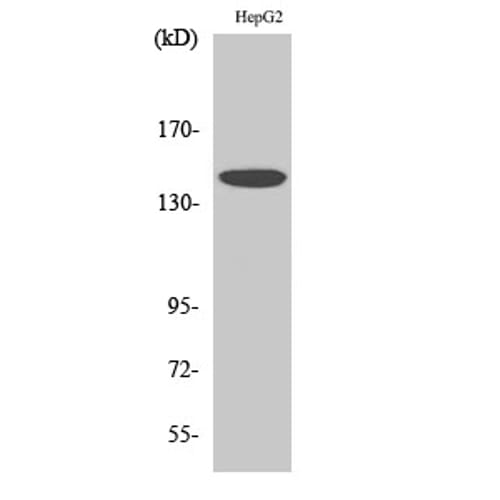
IMPORTANT NOTE This product is custom manufactured with a lead time of 3-4 weeks. Once in production, this item cannot be cancelled from an order and is not eligible for return. Target Protein MET Clonality Polyclonal Storage/Stability -20°C/1 year Application WB,IF,ELISA Recommended Dilution Western Blot: 1/500 - 1/2000. Immunofluorescence: 1/200 - 1/1000. ELISA: 1/5000. Not yet tested in other applications. Concentration 1 mg/ml Reactive Species Human,Mouse,Rat Host Species Rabbit Immunogen Synthesized peptide derived from Met, at AA range: 950-1030 Specificity Met Polyclonal Antibody detects endogenous levels of Met protein. Purification The antibody was affinity-purified from rabbit antiserum by affinity-chromatography using epitope-specific immunogen Form Liquid in PBS containing 50% glycerol, 0.5% BSA and 0.02% sodium azide. Gene Name MET Accession No. P08581 P16056 P97523 Alternate Names MET; Hepatocyte growth factor receptor; HGF receptor; HGF/SF receptor; Proto-oncogene c-Met; Scatter factor receptor; SF receptor; Tyrosine-protein kinase Met Description MET proto-oncogene, receptor tyrosine kinase(MET) Homo sapiens This gene encodes a member of the receptor tyrosine kinase family of proteins and the product of the proto-oncogene MET. The encoded preproprotein is proteolytically processed to generate alpha and beta subunits that are linked via disulfide bonds to form the mature receptor. Further processing of the beta subunit results in the formation of the M10 peptide, which has been shown to reduce lung fibrosis. Binding of its ligand, hepatocyte growth factor, induces dimerization and activation of the receptor, which plays a role in cellular survival, embryogenesis, and cellular migration and invasion. Mutations in this gene are associated with papillary renal cell carcinoma, hepatocellular carcinoma, and various head and neck cancers. Amplification and overexpression of this gene are also associated with multiple human cancers. [provided by RefSeq, May 2016], Cell Pathway/ Category Cytokine-cytokine receptor interaction,Endocytosis,Axon guidance,Focal adhesion,Adherens_Junction,Epithelial cell signaling in Helicobacter pylori infection,Pathways in cancer,Colorectal cancer,Renal cell carcinoma,Melanoma, Protein Expression Aorta endothelial cell,Breast and cornea,Cerebellum,Liver,P Subcellular Localization extracellular region,plasma membrane,integral component of plasma membrane,basal plasma membrane,cell surface,integral component of membrane, Protein Function catalytic activity:ATP + a [protein]-L-tyrosine = ADP + a [protein]-L-tyrosine phosphate.,disease:Activation of MET after rearrangement with the TPR gene produces an oncogenic protein.,disease:Defects in MET are a cause of hepatocellular carcinoma (HCC) [MIM:114550].,disease:Defects in MET are a cause of hereditary papillary renal carcinoma (HPRC) [MIM:605074]; also known as papillary renal cell carcinoma 2 (RCCP2). HPRC is a form of inherited kidney cancer characterized by a predisposition to develop multiple, bilateral papillary renal tumors. The pattern of inheritance is consistent with autosomal dominant transmission with reduced penetrance.,disease:Defects in MET may be associated with gastric cancer.,disease:Genetic variations in MET may be associated with susceptibility to autism type 9 (AUTS9) [MIM:611015]. Autism is a neurodevelopmental disorder characterized by disturbance in language, perception and socialization. The disorder is classically defined by a triad of limited or absent verbal communication, a lack of reciprocal social interaction or responsiveness, and restricted, stereotypical, and ritualized patterns of interests and behavior.,domain:The kinase domain is involved in SPSB1 binding.,function:Receptor for hepatocyte growth factor and scatter factor. Has a tyrosine-protein kinase activity. Functions in cell proliferation, scattering, morphogenesis and survival.,online information:C-MET entry,similarity:Belongs to the protein kinase superfamily. Tyr protein kinase family.,similarity:Contains 1 protein kinase domain.,similarity:Contains 1 Sema domain.,similarity:Contains 3 IPT/TIG domains.,subunit:Heterodimer formed of an alpha chain (50 kDa) and a beta chain (145 kDa) which are disulfide linked. Binds PLXNB1 and GRB2. Interacts with SPSB1, SPSB2 and SPSB4 (By similarity). Interacts with INPP5D/SHIP1. When phosphorylated at Tyr-1356, interacts with INPPL1/SHIP2. Interacts with RANBP9 and RANBP10, as well as SPSB1, SPSB2, SPSB3 and SPSB4. SPSB1 binding occurs in the presence and in the absence of HGF, however HGF treatment has a positive effect on this interaction. Interacts with MUC20; prevents interaction with GRB2 and suppresses hepatocyte growth factor-induced cell proliferation., Usage For Research Use Only! Not for diagnostic or therapeutic procedures. - Reviews
| Antibody Specification | |
| Datasheet | |
| IMPORTANT NOTE | This product is custom manufactured with a lead time of 3-4 weeks. Once in production, this item cannot be cancelled from an order and is not eligible for return. |
| Target Protein | MET |
| Clonality | Polyclonal |
| Storage/Stability | -20°C/1 year |
| Application | WB,IF,ELISA |
| Recommended Dilution | Western Blot: 1/500 - 1/2000. Immunofluorescence: 1/200 - 1/1000. ELISA: 1/5000. Not yet tested in other applications. |
| Concentration | 1 mg/ml |
| Reactive Species | Human,Mouse,Rat |
| Host Species | Rabbit |
| Immunogen | Synthesized peptide derived from Met, at AA range: 950-1030 |
| Specificity | Met Polyclonal Antibody detects endogenous levels of Met protein. |
| Purification | The antibody was affinity-purified from rabbit antiserum by affinity-chromatography using epitope-specific immunogen |
| Form | Liquid in PBS containing 50% glycerol, 0.5% BSA and 0.02% sodium azide. |
| Gene Name | MET |
| Accession No. | P08581 P16056 P97523 |
| Alternate Names | MET; Hepatocyte growth factor receptor; HGF receptor; HGF/SF receptor; Proto-oncogene c-Met; Scatter factor receptor; SF receptor; Tyrosine-protein kinase Met |
| Description | MET proto-oncogene, receptor tyrosine kinase(MET) Homo sapiens This gene encodes a member of the receptor tyrosine kinase family of proteins and the product of the proto-oncogene MET. The encoded preproprotein is proteolytically processed to generate alpha and beta subunits that are linked via disulfide bonds to form the mature receptor. Further processing of the beta subunit results in the formation of the M10 peptide, which has been shown to reduce lung fibrosis. Binding of its ligand, hepatocyte growth factor, induces dimerization and activation of the receptor, which plays a role in cellular survival, embryogenesis, and cellular migration and invasion. Mutations in this gene are associated with papillary renal cell carcinoma, hepatocellular carcinoma, and various head and neck cancers. Amplification and overexpression of this gene are also associated with multiple human cancers. [provided by RefSeq, May 2016], |
| Cell Pathway/ Category | Cytokine-cytokine receptor interaction,Endocytosis,Axon guidance,Focal adhesion,Adherens_Junction,Epithelial cell signaling in Helicobacter pylori infection,Pathways in cancer,Colorectal cancer,Renal cell carcinoma,Melanoma, |
| Protein Expression | Aorta endothelial cell,Breast and cornea,Cerebellum,Liver,P |
| Subcellular Localization | extracellular region,plasma membrane,integral component of plasma membrane,basal plasma membrane,cell surface,integral component of membrane, |
| Protein Function | catalytic activity:ATP + a [protein]-L-tyrosine = ADP + a [protein]-L-tyrosine phosphate.,disease:Activation of MET after rearrangement with the TPR gene produces an oncogenic protein.,disease:Defects in MET are a cause of hepatocellular carcinoma (HCC) [MIM:114550].,disease:Defects in MET are a cause of hereditary papillary renal carcinoma (HPRC) [MIM:605074]; also known as papillary renal cell carcinoma 2 (RCCP2). HPRC is a form of inherited kidney cancer characterized by a predisposition to develop multiple, bilateral papillary renal tumors. The pattern of inheritance is consistent with autosomal dominant transmission with reduced penetrance.,disease:Defects in MET may be associated with gastric cancer.,disease:Genetic variations in MET may be associated with susceptibility to autism type 9 (AUTS9) [MIM:611015]. Autism is a neurodevelopmental disorder characterized by disturbance in language, perception and socialization. The disorder is classically defined by a triad of limited or absent verbal communication, a lack of reciprocal social interaction or responsiveness, and restricted, stereotypical, and ritualized patterns of interests and behavior.,domain:The kinase domain is involved in SPSB1 binding.,function:Receptor for hepatocyte growth factor and scatter factor. Has a tyrosine-protein kinase activity. Functions in cell proliferation, scattering, morphogenesis and survival.,online information:C-MET entry,similarity:Belongs to the protein kinase superfamily. Tyr protein kinase family.,similarity:Contains 1 protein kinase domain.,similarity:Contains 1 Sema domain.,similarity:Contains 3 IPT/TIG domains.,subunit:Heterodimer formed of an alpha chain (50 kDa) and a beta chain (145 kDa) which are disulfide linked. Binds PLXNB1 and GRB2. Interacts with SPSB1, SPSB2 and SPSB4 (By similarity). Interacts with INPP5D/SHIP1. When phosphorylated at Tyr-1356, interacts with INPPL1/SHIP2. Interacts with RANBP9 and RANBP10, as well as SPSB1, SPSB2, SPSB3 and SPSB4. SPSB1 binding occurs in the presence and in the absence of HGF, however HGF treatment has a positive effect on this interaction. Interacts with MUC20; prevents interaction with GRB2 and suppresses hepatocyte growth factor-induced cell proliferation., |
| Usage | For Research Use Only! Not for diagnostic or therapeutic procedures. |