

ITT3003
ITT3003
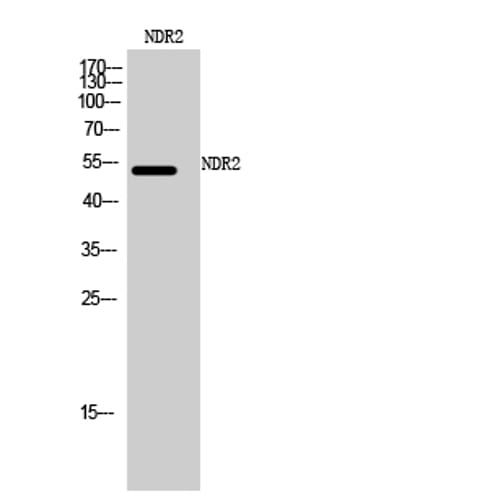
ITT3003
from
$424.00
Price in reward points: 424
- Catalog: ITT3003
- Gene/Protein: STK38L
- Product Description: Immunotag™ NDR2 Polyclonal Antibody
-
Description
-
Specifications
Antibody Specification Datasheet 
IMPORTANT NOTE This product is custom manufactured with a lead time of 3-4 weeks. Once in production, this item cannot be cancelled from an order and is not eligible for return. Target Protein NDR2 Clonality Polyclonal Storage/Stability -20°C/1 year Application WB,IHC-p,ELISA Recommended Dilution Western Blot: 1/500 - 1/2000.IHC-p:1:50-300 ELISA: 1/20000. Not yet tested in other applications. Concentration 1 mg/ml Reactive Species Human,Mouse,Rat Host Species Rabbit Immunogen Synthesized peptide derived from NDR2 . at AA range: 380-460 Specificity NDR2 Polyclonal Antibody detects endogenous levels of NDR2 protein. Purification The antibody was affinity-purified from rabbit antiserum by affinity-chromatography using epitope-specific immunogen Form Liquid in PBS containing 50% glycerol, 0.5% BSA and 0.02% sodium azide. Gene Name STK38L Accession No. Q9Y2H1 Q7TSE6 Alternate Names STK38L; KIAA0965; NDR2; Serine/threonine-protein kinase 38-like; NDR2 protein kinase; Nuclear Dbf2-related kinase 2 Description catalytic activity:ATP + a protein = ADP + a phosphoprotein.,cofactor:Magnesium.,enzyme regulation:Activated by binding of S100B which releases autoinhibitory N-lobe interactions, enabling ATP to bind and the autophosphorylation of Ser-282. Thr-442 then undergoes calcium-dependent phosphorylation by an upstream kinase. Interactions between phosphorylated Thr-442 and the N-lobe promote additional structural changes that complete the activation of the kinase. Autoinhibition is also released by the binding of MOB1/MOBKL1A and MOB2/HCCA2 to the N-terminal of STK38L.,function:Involved in the regulation of structural processes in differentiating and mature neuronal cells.,PTM:Phosphorylated upon DNA damage, probably by ATM or ATR.,similarity:Belongs to the protein kinase superfamily. AGC Ser/Thr protein kinase family.,similarity:Contains 1 AGC-kinase C-terminal domain.,similarity:Contains 1 protein kinase domain.,subcellular location:Associated with the actin cytoskeleton.,subunit:Homodimeric S100B binds two molecules of STK38L (By similarity). Interacts with MOB1 and MOB2.,tissue specificity:Ubiquitously expressed with highest levels observed in the thymus., Protein Expression Brain,Cervix carcinoma,Lung carcinoma,Testis, Subcellular Localization cytoplasm,actin cytoskeleton,membrane, Protein Function catalytic activity:ATP + a protein = ADP + a phosphoprotein.,cofactor:Magnesium.,enzyme regulation:Activated by binding of S100B which releases autoinhibitory N-lobe interactions, enabling ATP to bind and the autophosphorylation of Ser-282. Thr-442 then undergoes calcium-dependent phosphorylation by an upstream kinase. Interactions between phosphorylated Thr-442 and the N-lobe promote additional structural changes that complete the activation of the kinase. Autoinhibition is also released by the binding of MOB1/MOBKL1A and MOB2/HCCA2 to the N-terminal of STK38L.,function:Involved in the regulation of structural processes in differentiating and mature neuronal cells.,PTM:Phosphorylated upon DNA damage, probably by ATM or ATR.,similarity:Belongs to the protein kinase superfamily. AGC Ser/Thr protein kinase family.,similarity:Contains 1 AGC-kinase C-terminal domain.,similarity:Contains 1 protein kinase domain.,subcellular location:Associated with the actin cytoskeleton.,subunit:Homodimeric S100B binds two molecules of STK38L (By similarity). Interacts with MOB1 and MOB2.,tissue specificity:Ubiquitously expressed with highest levels observed in the thymus., Usage For Research Use Only! Not for diagnostic or therapeutic procedures. - Reviews
| Antibody Specification | |
| Datasheet | |
| IMPORTANT NOTE | This product is custom manufactured with a lead time of 3-4 weeks. Once in production, this item cannot be cancelled from an order and is not eligible for return. |
| Target Protein | NDR2 |
| Clonality | Polyclonal |
| Storage/Stability | -20°C/1 year |
| Application | WB,IHC-p,ELISA |
| Recommended Dilution | Western Blot: 1/500 - 1/2000.IHC-p:1:50-300 ELISA: 1/20000. Not yet tested in other applications. |
| Concentration | 1 mg/ml |
| Reactive Species | Human,Mouse,Rat |
| Host Species | Rabbit |
| Immunogen | Synthesized peptide derived from NDR2 . at AA range: 380-460 |
| Specificity | NDR2 Polyclonal Antibody detects endogenous levels of NDR2 protein. |
| Purification | The antibody was affinity-purified from rabbit antiserum by affinity-chromatography using epitope-specific immunogen |
| Form | Liquid in PBS containing 50% glycerol, 0.5% BSA and 0.02% sodium azide. |
| Gene Name | STK38L |
| Accession No. | Q9Y2H1 Q7TSE6 |
| Alternate Names | STK38L; KIAA0965; NDR2; Serine/threonine-protein kinase 38-like; NDR2 protein kinase; Nuclear Dbf2-related kinase 2 |
| Description | catalytic activity:ATP + a protein = ADP + a phosphoprotein.,cofactor:Magnesium.,enzyme regulation:Activated by binding of S100B which releases autoinhibitory N-lobe interactions, enabling ATP to bind and the autophosphorylation of Ser-282. Thr-442 then undergoes calcium-dependent phosphorylation by an upstream kinase. Interactions between phosphorylated Thr-442 and the N-lobe promote additional structural changes that complete the activation of the kinase. Autoinhibition is also released by the binding of MOB1/MOBKL1A and MOB2/HCCA2 to the N-terminal of STK38L.,function:Involved in the regulation of structural processes in differentiating and mature neuronal cells.,PTM:Phosphorylated upon DNA damage, probably by ATM or ATR.,similarity:Belongs to the protein kinase superfamily. AGC Ser/Thr protein kinase family.,similarity:Contains 1 AGC-kinase C-terminal domain.,similarity:Contains 1 protein kinase domain.,subcellular location:Associated with the actin cytoskeleton.,subunit:Homodimeric S100B binds two molecules of STK38L (By similarity). Interacts with MOB1 and MOB2.,tissue specificity:Ubiquitously expressed with highest levels observed in the thymus., |
| Protein Expression | Brain,Cervix carcinoma,Lung carcinoma,Testis, |
| Subcellular Localization | cytoplasm,actin cytoskeleton,membrane, |
| Protein Function | catalytic activity:ATP + a protein = ADP + a phosphoprotein.,cofactor:Magnesium.,enzyme regulation:Activated by binding of S100B which releases autoinhibitory N-lobe interactions, enabling ATP to bind and the autophosphorylation of Ser-282. Thr-442 then undergoes calcium-dependent phosphorylation by an upstream kinase. Interactions between phosphorylated Thr-442 and the N-lobe promote additional structural changes that complete the activation of the kinase. Autoinhibition is also released by the binding of MOB1/MOBKL1A and MOB2/HCCA2 to the N-terminal of STK38L.,function:Involved in the regulation of structural processes in differentiating and mature neuronal cells.,PTM:Phosphorylated upon DNA damage, probably by ATM or ATR.,similarity:Belongs to the protein kinase superfamily. AGC Ser/Thr protein kinase family.,similarity:Contains 1 AGC-kinase C-terminal domain.,similarity:Contains 1 protein kinase domain.,subcellular location:Associated with the actin cytoskeleton.,subunit:Homodimeric S100B binds two molecules of STK38L (By similarity). Interacts with MOB1 and MOB2.,tissue specificity:Ubiquitously expressed with highest levels observed in the thymus., |
| Usage | For Research Use Only! Not for diagnostic or therapeutic procedures. |