

ITT3026
ITT3026
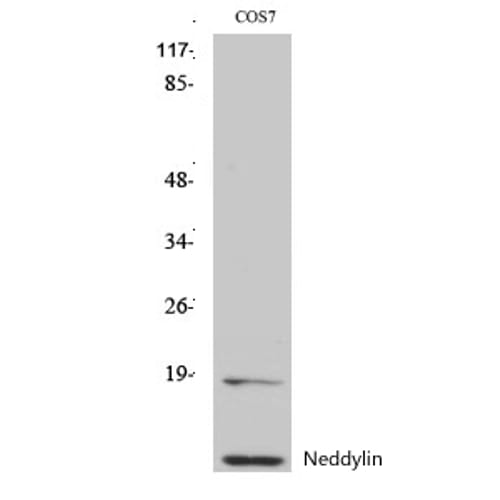
ITT3026
from
$424.00
Price in reward points: 424
- Catalog: ITT3026
- Gene/Protein: NEDD8
- Product Description: Immunotag™ Neddylin Polyclonal Antibody
-
Description
-
Specifications
Antibody Specification Datasheet 
IMPORTANT NOTE This product is custom manufactured with a lead time of 3-4 weeks. Once in production, this item cannot be cancelled from an order and is not eligible for return. Target Protein Neddylin Clonality Polyclonal Storage/Stability -20°C/1 year Application WB,IHC-p,ELISA Recommended Dilution Western Blot: 1/500 - 1/2000. Immunohistochemistry: 1/100 - 1/300. ELISA: 1/5000. Not yet tested in other applications. Concentration 1 mg/ml Reactive Species Human,Mouse,Rat,Monkey Host Species Rabbit Immunogen Synthesized peptide derived from Neddylin, at AA range: 10-90 Specificity Neddylin Polyclonal Antibody detects endogenous levels of Neddylin protein. Purification The antibody was affinity-purified from rabbit antiserum by affinity-chromatography using epitope-specific immunogen Form Liquid in PBS containing 50% glycerol, 0.5% BSA and 0.02% sodium azide. Gene Name NEDD8 Accession No. Q15843 P29595 Q71UE8 Alternate Names NEDD8; NEDD8; Neddylin; Neural precursor cell expressed developmentally down-regulated protein 8; NEDD-8; Ubiquitin-like protein Nedd8 Description function:Ubiquitin-like protein which plays an important role in cell cycle control and embryogenesis. Covalent attachment to its substrates requires prior activation by the E1 complex UBE1C-APPBP1 and linkage to the E2 enzyme UBE2M. Attachment of NEDD8 to cullins activates their associated E3 ubiquitin ligase activity, and thus promotes polyubiquitination and proteasomal degradation of cyclins and other regulatory proteins.,PTM:Cleavage of precursor form by UCHL3 or SENP8 is necessary for function.,similarity:Belongs to the ubiquitin family.,subcellular location:Mainly nuclear.,subunit:Directly interacts with NUB1 and AHR. Covalently attached to cullins and p53.,tissue specificity:Highly expressed in heart, skeletal muscle, spleen, thymus, prostate, testis, ovary, colon and leukocytes., Protein Expression Fibrosarcoma, Subcellular Localization nucleus,cytosol,extracellular exosome, Protein Function function:Ubiquitin-like protein which plays an important role in cell cycle control and embryogenesis. Covalent attachment to its substrates requires prior activation by the E1 complex UBE1C-APPBP1 and linkage to the E2 enzyme UBE2M. Attachment of NEDD8 to cullins activates their associated E3 ubiquitin ligase activity, and thus promotes polyubiquitination and proteasomal degradation of cyclins and other regulatory proteins.,PTM:Cleavage of precursor form by UCHL3 or SENP8 is necessary for function.,similarity:Belongs to the ubiquitin family.,subcellular location:Mainly nuclear.,subunit:Directly interacts with NUB1 and AHR. Covalently attached to cullins and p53.,tissue specificity:Highly expressed in heart, skeletal muscle, spleen, thymus, prostate, testis, ovary, colon and leukocytes., Usage For Research Use Only! Not for diagnostic or therapeutic procedures. - Reviews
| Antibody Specification | |
| Datasheet | |
| IMPORTANT NOTE | This product is custom manufactured with a lead time of 3-4 weeks. Once in production, this item cannot be cancelled from an order and is not eligible for return. |
| Target Protein | Neddylin |
| Clonality | Polyclonal |
| Storage/Stability | -20°C/1 year |
| Application | WB,IHC-p,ELISA |
| Recommended Dilution | Western Blot: 1/500 - 1/2000. Immunohistochemistry: 1/100 - 1/300. ELISA: 1/5000. Not yet tested in other applications. |
| Concentration | 1 mg/ml |
| Reactive Species | Human,Mouse,Rat,Monkey |
| Host Species | Rabbit |
| Immunogen | Synthesized peptide derived from Neddylin, at AA range: 10-90 |
| Specificity | Neddylin Polyclonal Antibody detects endogenous levels of Neddylin protein. |
| Purification | The antibody was affinity-purified from rabbit antiserum by affinity-chromatography using epitope-specific immunogen |
| Form | Liquid in PBS containing 50% glycerol, 0.5% BSA and 0.02% sodium azide. |
| Gene Name | NEDD8 |
| Accession No. | Q15843 P29595 Q71UE8 |
| Alternate Names | NEDD8; NEDD8; Neddylin; Neural precursor cell expressed developmentally down-regulated protein 8; NEDD-8; Ubiquitin-like protein Nedd8 |
| Description | function:Ubiquitin-like protein which plays an important role in cell cycle control and embryogenesis. Covalent attachment to its substrates requires prior activation by the E1 complex UBE1C-APPBP1 and linkage to the E2 enzyme UBE2M. Attachment of NEDD8 to cullins activates their associated E3 ubiquitin ligase activity, and thus promotes polyubiquitination and proteasomal degradation of cyclins and other regulatory proteins.,PTM:Cleavage of precursor form by UCHL3 or SENP8 is necessary for function.,similarity:Belongs to the ubiquitin family.,subcellular location:Mainly nuclear.,subunit:Directly interacts with NUB1 and AHR. Covalently attached to cullins and p53.,tissue specificity:Highly expressed in heart, skeletal muscle, spleen, thymus, prostate, testis, ovary, colon and leukocytes., |
| Protein Expression | Fibrosarcoma, |
| Subcellular Localization | nucleus,cytosol,extracellular exosome, |
| Protein Function | function:Ubiquitin-like protein which plays an important role in cell cycle control and embryogenesis. Covalent attachment to its substrates requires prior activation by the E1 complex UBE1C-APPBP1 and linkage to the E2 enzyme UBE2M. Attachment of NEDD8 to cullins activates their associated E3 ubiquitin ligase activity, and thus promotes polyubiquitination and proteasomal degradation of cyclins and other regulatory proteins.,PTM:Cleavage of precursor form by UCHL3 or SENP8 is necessary for function.,similarity:Belongs to the ubiquitin family.,subcellular location:Mainly nuclear.,subunit:Directly interacts with NUB1 and AHR. Covalently attached to cullins and p53.,tissue specificity:Highly expressed in heart, skeletal muscle, spleen, thymus, prostate, testis, ovary, colon and leukocytes., |
| Usage | For Research Use Only! Not for diagnostic or therapeutic procedures. |