

ITT3162
ITT3162
ITT3162
from
$424.00
Price in reward points: 424
- Catalog: ITT3162
- Gene/Protein: RTN4
- Product Description: Immunotag™ Nogo A Polyclonal Antibody
-
Description
-
Specifications
Antibody Specification Datasheet 
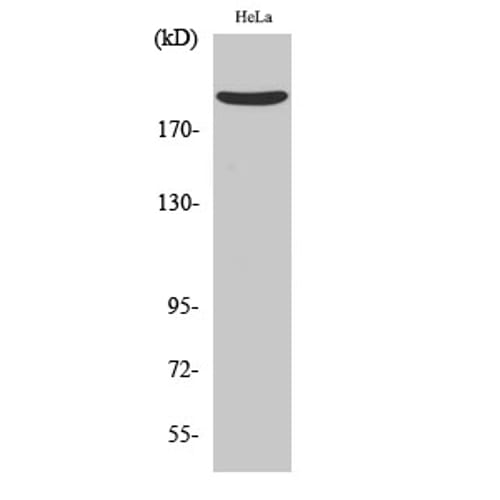
IMPORTANT NOTE This product is custom manufactured with a lead time of 3-4 weeks. Once in production, this item cannot be cancelled from an order and is not eligible for return. Target Protein Nogo A Clonality Polyclonal Storage/Stability -20°C/1 year Application WB,IHC-p,ELISA Recommended Dilution Western Blot: 1/500 - 1/2000. Immunohistochemistry: 1/100 - 1/300. ELISA: 1/10000. Not yet tested in other applications. Concentration 1 mg/ml Reactive Species Human,Mouse,Rat Host Species Rabbit Immunogen Synthesized peptide derived from the Internal region of human Nogo A Specificity Nogo A Polyclonal Antibody detects endogenous levels of Nogo A protein. Purification The antibody was affinity-purified from rabbit antiserum by affinity-chromatography using epitope-specific immunogen Form Liquid in PBS containing 50% glycerol, 0.5% BSA and 0.02% sodium azide. Gene Name RTN4 Accession No. Q9NQC3 Q99P72 Q9JK11 Alternate Names RTN4; KIAA0886; NOGO; My043; SP1507; Reticulon-4; Foocen; Neurite outgrowth inhibitor; Nogo protein; Neuroendocrine-specific protein; NSP; Neuroendocrine-specific protein C homolog; RTN-x; Reticulon-5 Description reticulon 4(RTN4) Homo sapiens This gene belongs to the family of reticulon encoding genes. Reticulons are associated with the endoplasmic reticulum, and are involved in neuroendocrine secretion or in membrane trafficking in neuroendocrine cells. The product of this gene is a potent neurite outgrowth inhibitor which may also help block the regeneration of the central nervous system in higher vertebrates. Alternatively spliced transcript variants derived both from differential splicing and differential promoter usage and encoding different isoforms have been identified. [provided by RefSeq, Jul 2008], Cell Pathway/ Category Regulation of Microtubule Dynamics, Regulation of Actin Dynamics, SAPK_JNK, Stem cell pathway, Adherens_Junction Protein Expression Brain,Epithelium,Eye,Fetal brain,Fibroblast,Kidney,Ovary,Pancreas,Pituitary,Placenta,Skelet Subcellular Localization intracellular,nuclear envelope,endoplasmic reticulum,endoplasmic reticulum membrane,plasma membrane,cell-cell adherens junction,postsynaptic density,integral component of membrane,integral component of endoplasmic reticulum membrane,cell projection, Protein Function domain:Three regions, residues 59-172, 544-725 and the loop 66 amino acids, between the two transmembrane domains, known as Nogo-66 loop, appear to be responsible for the inhibitory effect on neurite outgrowth and the spreading of neurons. This Nogo-66 loop, mediates also the binding of RTN4 to its receptor.,function:Potent neurite growth inhibitor in vitro and plays a role both in the restriction of axonal regeneration after injury and in structural plasticity in the CNS. Isoform 2 reduces the anti-apoptotic activity of Bcl-xl and Bcl-2. This is likely consecutive to their change in subcellular location, from the mitochondria to the endoplasmic reticulum, after binding and sequestration. Isoform 2 and isoform 3 inhibit BACE1 activity and amyloid precursor protein processing.,online information:Nerve regrowth: nipped by a no-go - Issue 69 of April 2006,online information:The Singapore human mutation and polymorphism database,sequence caution:Translation N-terminally extended.,similarity:Contains 1 reticulon domain.,subcellular location:Anchored to the membrane of the endoplasmic reticulum through 2 putative transmembrane domains.,subunit:Binds to RTN4R. Interacts with Bcl-xl and Bcl-2. Isoform 2 binds to NGBR and RTN3. Isoform 2 and isoform 3 interact with BACE1 and BACE2. Interacts with RTN4IP1.,tissue specificity:Isoform 1 is specifically expressed in brain and testis and weakly in heart and skeletal muscle. Isoform 2 is widely expressed except for the liver. Isoform 3 is expressed in brain, skeletal muscle and adipocytes. Isoform 4 is testis-specific., Usage For Research Use Only! Not for diagnostic or therapeutic procedures. - Reviews
| Antibody Specification | |
| Datasheet | |
| IMPORTANT NOTE | This product is custom manufactured with a lead time of 3-4 weeks. Once in production, this item cannot be cancelled from an order and is not eligible for return. |
| Target Protein | Nogo A |
| Clonality | Polyclonal |
| Storage/Stability | -20°C/1 year |
| Application | WB,IHC-p,ELISA |
| Recommended Dilution | Western Blot: 1/500 - 1/2000. Immunohistochemistry: 1/100 - 1/300. ELISA: 1/10000. Not yet tested in other applications. |
| Concentration | 1 mg/ml |
| Reactive Species | Human,Mouse,Rat |
| Host Species | Rabbit |
| Immunogen | Synthesized peptide derived from the Internal region of human Nogo A |
| Specificity | Nogo A Polyclonal Antibody detects endogenous levels of Nogo A protein. |
| Purification | The antibody was affinity-purified from rabbit antiserum by affinity-chromatography using epitope-specific immunogen |
| Form | Liquid in PBS containing 50% glycerol, 0.5% BSA and 0.02% sodium azide. |
| Gene Name | RTN4 |
| Accession No. | Q9NQC3 Q99P72 Q9JK11 |
| Alternate Names | RTN4; KIAA0886; NOGO; My043; SP1507; Reticulon-4; Foocen; Neurite outgrowth inhibitor; Nogo protein; Neuroendocrine-specific protein; NSP; Neuroendocrine-specific protein C homolog; RTN-x; Reticulon-5 |
| Description | reticulon 4(RTN4) Homo sapiens This gene belongs to the family of reticulon encoding genes. Reticulons are associated with the endoplasmic reticulum, and are involved in neuroendocrine secretion or in membrane trafficking in neuroendocrine cells. The product of this gene is a potent neurite outgrowth inhibitor which may also help block the regeneration of the central nervous system in higher vertebrates. Alternatively spliced transcript variants derived both from differential splicing and differential promoter usage and encoding different isoforms have been identified. [provided by RefSeq, Jul 2008], |
| Cell Pathway/ Category | Regulation of Microtubule Dynamics, Regulation of Actin Dynamics, SAPK_JNK, Stem cell pathway, Adherens_Junction |
| Protein Expression | Brain,Epithelium,Eye,Fetal brain,Fibroblast,Kidney,Ovary,Pancreas,Pituitary,Placenta,Skelet |
| Subcellular Localization | intracellular,nuclear envelope,endoplasmic reticulum,endoplasmic reticulum membrane,plasma membrane,cell-cell adherens junction,postsynaptic density,integral component of membrane,integral component of endoplasmic reticulum membrane,cell projection, |
| Protein Function | domain:Three regions, residues 59-172, 544-725 and the loop 66 amino acids, between the two transmembrane domains, known as Nogo-66 loop, appear to be responsible for the inhibitory effect on neurite outgrowth and the spreading of neurons. This Nogo-66 loop, mediates also the binding of RTN4 to its receptor.,function:Potent neurite growth inhibitor in vitro and plays a role both in the restriction of axonal regeneration after injury and in structural plasticity in the CNS. Isoform 2 reduces the anti-apoptotic activity of Bcl-xl and Bcl-2. This is likely consecutive to their change in subcellular location, from the mitochondria to the endoplasmic reticulum, after binding and sequestration. Isoform 2 and isoform 3 inhibit BACE1 activity and amyloid precursor protein processing.,online information:Nerve regrowth: nipped by a no-go - Issue 69 of April 2006,online information:The Singapore human mutation and polymorphism database,sequence caution:Translation N-terminally extended.,similarity:Contains 1 reticulon domain.,subcellular location:Anchored to the membrane of the endoplasmic reticulum through 2 putative transmembrane domains.,subunit:Binds to RTN4R. Interacts with Bcl-xl and Bcl-2. Isoform 2 binds to NGBR and RTN3. Isoform 2 and isoform 3 interact with BACE1 and BACE2. Interacts with RTN4IP1.,tissue specificity:Isoform 1 is specifically expressed in brain and testis and weakly in heart and skeletal muscle. Isoform 2 is widely expressed except for the liver. Isoform 3 is expressed in brain, skeletal muscle and adipocytes. Isoform 4 is testis-specific., |
| Usage | For Research Use Only! Not for diagnostic or therapeutic procedures. |