

ITT3807
ITT3807
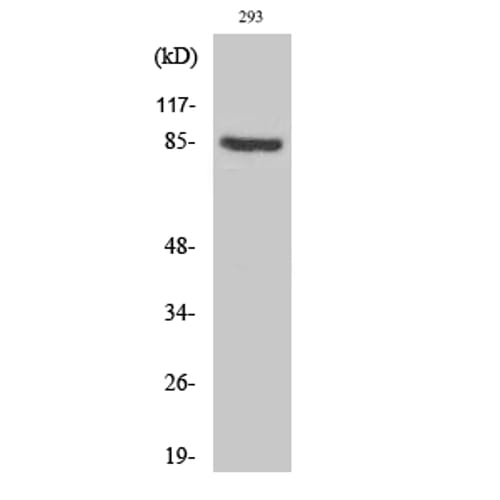
ITT3807
from
$424.00
Price in reward points: 424
- Catalog: ITT3807
- Gene/Protein: PNPT1
- Product Description: Immunotag™ PNPase Polyclonal Antibody
-
Description
-
Specifications
Antibody Specification Datasheet 
IMPORTANT NOTE This product is custom manufactured with a lead time of 3-4 weeks. Once in production, this item cannot be cancelled from an order and is not eligible for return. Target Protein PNPase Clonality Polyclonal Storage/Stability -20°C/1 year Application WB,IHC-p,ELISA Recommended Dilution Western Blot: 1/500 - 1/2000. Immunohistochemistry: 1/100 - 1/300. ELISA: 1/20000. Not yet tested in other applications. Concentration 1 mg/ml Reactive Species Human,Mouse Host Species Rabbit Immunogen The antiserum was produced against synthesized peptide derived from human PNPT1. AA range:570-619 Specificity PNPase Polyclonal Antibody detects endogenous levels of PNPase protein. Purification The antibody was affinity-purified from rabbit antiserum by affinity-chromatography using epitope-specific immunogen Form Liquid in PBS containing 50% glycerol, 0.5% BSA and 0.02% sodium azide. Gene Name PNPT1 Accession No. Q8TCS8 Q8K1R3 Alternate Names PNPT1; PNPASE; Polyribonucleotide nucleotidyltransferase 1; mitochondrial; 3'-5' RNA exonuclease OLD35; PNPase old-35; Polynucleotide phosphorylase 1; PNPase 1; Polynucleotide phosphorylase-like protein Description polyribonucleotide nucleotidyltransferase 1(PNPT1) Homo sapiens The protein encoded by this gene belongs to the evolutionary conserved polynucleotide phosphorylase family comprised of phosphate dependent 3'-to-5' exoribonucleases implicated in RNA processing and degradation. This enzyme is predominantly localized in the mitochondrial intermembrane space and is involved in import of RNA to mitochondria. Mutations in this gene have been associated with combined oxidative phosphorylation deficiency-13 and autosomal recessive nonsyndromic deafness-70. Related pseudogenes are found on chromosomes 3 and 7. [provided by RefSeq, Dec 2012], Cell Pathway/ Category Purine metabolism,Pyrimidine metabolism,RNA degradation, Protein Expression Cervix,Epithelium,Melanoma,Skin,Teratocarcinoma,Urinary bla Subcellular Localization cytoplasm,mitochondrion,mitochondrial intermembrane space,membrane,mitochondrial degradosome, Protein Function catalytic activity:RNA(n+1) + phosphate = RNA(n) + a nucleoside diphosphate.,function:Involved in mRNA degradation. Hydrolyzes single-stranded polyribonucleotides processively in the 3'- to 5'-direction.,induction:Up-regulated in cells upon senescence and terminal differentiation. Up-regulated after treatment with interferon beta (IFN-beta).,PTM:Phosphorylated upon DNA damage, probably by ATM or ATR.,similarity:Belongs to the polyribonucleotide nucleotidyltransferase family.,similarity:Contains 1 KH domain.,similarity:Contains 1 S1 motif domain.,subunit:Homotrimer (Potential). Interacts with TCL1A; the interaction has no effect on PNPT1 exonuclease activity., Usage For Research Use Only! Not for diagnostic or therapeutic procedures. - Reviews
| Antibody Specification | |
| Datasheet | |
| IMPORTANT NOTE | This product is custom manufactured with a lead time of 3-4 weeks. Once in production, this item cannot be cancelled from an order and is not eligible for return. |
| Target Protein | PNPase |
| Clonality | Polyclonal |
| Storage/Stability | -20°C/1 year |
| Application | WB,IHC-p,ELISA |
| Recommended Dilution | Western Blot: 1/500 - 1/2000. Immunohistochemistry: 1/100 - 1/300. ELISA: 1/20000. Not yet tested in other applications. |
| Concentration | 1 mg/ml |
| Reactive Species | Human,Mouse |
| Host Species | Rabbit |
| Immunogen | The antiserum was produced against synthesized peptide derived from human PNPT1. AA range:570-619 |
| Specificity | PNPase Polyclonal Antibody detects endogenous levels of PNPase protein. |
| Purification | The antibody was affinity-purified from rabbit antiserum by affinity-chromatography using epitope-specific immunogen |
| Form | Liquid in PBS containing 50% glycerol, 0.5% BSA and 0.02% sodium azide. |
| Gene Name | PNPT1 |
| Accession No. | Q8TCS8 Q8K1R3 |
| Alternate Names | PNPT1; PNPASE; Polyribonucleotide nucleotidyltransferase 1; mitochondrial; 3'-5' RNA exonuclease OLD35; PNPase old-35; Polynucleotide phosphorylase 1; PNPase 1; Polynucleotide phosphorylase-like protein |
| Description | polyribonucleotide nucleotidyltransferase 1(PNPT1) Homo sapiens The protein encoded by this gene belongs to the evolutionary conserved polynucleotide phosphorylase family comprised of phosphate dependent 3'-to-5' exoribonucleases implicated in RNA processing and degradation. This enzyme is predominantly localized in the mitochondrial intermembrane space and is involved in import of RNA to mitochondria. Mutations in this gene have been associated with combined oxidative phosphorylation deficiency-13 and autosomal recessive nonsyndromic deafness-70. Related pseudogenes are found on chromosomes 3 and 7. [provided by RefSeq, Dec 2012], |
| Cell Pathway/ Category | Purine metabolism,Pyrimidine metabolism,RNA degradation, |
| Protein Expression | Cervix,Epithelium,Melanoma,Skin,Teratocarcinoma,Urinary bla |
| Subcellular Localization | cytoplasm,mitochondrion,mitochondrial intermembrane space,membrane,mitochondrial degradosome, |
| Protein Function | catalytic activity:RNA(n+1) + phosphate = RNA(n) + a nucleoside diphosphate.,function:Involved in mRNA degradation. Hydrolyzes single-stranded polyribonucleotides processively in the 3'- to 5'-direction.,induction:Up-regulated in cells upon senescence and terminal differentiation. Up-regulated after treatment with interferon beta (IFN-beta).,PTM:Phosphorylated upon DNA damage, probably by ATM or ATR.,similarity:Belongs to the polyribonucleotide nucleotidyltransferase family.,similarity:Contains 1 KH domain.,similarity:Contains 1 S1 motif domain.,subunit:Homotrimer (Potential). Interacts with TCL1A; the interaction has no effect on PNPT1 exonuclease activity., |
| Usage | For Research Use Only! Not for diagnostic or therapeutic procedures. |