

ITT3896
ITT3896
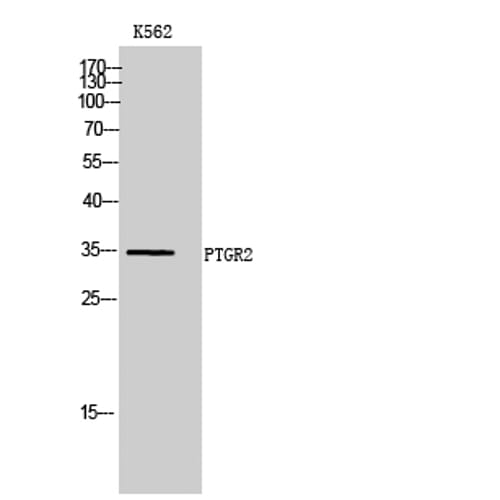
ITT3896
from
$424.00
Price in reward points: 424
- Catalog: ITT3896
- Gene/Protein: PTGR2
- Product Description: Immunotag™ PTGR2 Polyclonal Antibody
-
Description
-
Specifications
Antibody Specification Datasheet 
IMPORTANT NOTE This product is custom manufactured with a lead time of 3-4 weeks. Once in production, this item cannot be cancelled from an order and is not eligible for return. Target Protein PTGR2 Clonality Polyclonal Storage/Stability -20°C/1 year Application WB,IHC-p,ELISA Recommended Dilution Western Blot: 1/500 - 1/2000. Immunohistochemistry: 1/100 - 1/300. ELISA: 1/10000. Not yet tested in other applications. Concentration 1 mg/ml Reactive Species Human Host Species Rabbit Immunogen The antiserum was produced against synthesized peptide derived from human ZADH1. AA range:181-230 Specificity PTGR2 Polyclonal Antibody detects endogenous levels of PTGR2 protein. Purification The antibody was affinity-purified from rabbit antiserum by affinity-chromatography using epitope-specific immunogen Form Liquid in PBS containing 50% glycerol, 0.5% BSA and 0.02% sodium azide. Gene Name PTGR2 Accession No. Q8N8N7 Q8VDQ1 Alternate Names PTGR2; ZADH1; Prostaglandin reductase 2; PRG-2; 15-oxoprostaglandin 13-reductase; Zinc-binding alcohol dehydrogenase domain-containing protein 1 Description prostaglandin reductase 2(PTGR2) Homo sapiens This gene encodes an enzyme involved in the metabolism of prostaglandins. The encoded protein catalyzes the NADPH-dependent conversion of 15-keto-prostaglandin E2 to 15-keto-13,14-dihydro-prostaglandin E2. This protein may also be involved in regulating activation of the peroxisome proliferator-activated receptor. Alternative splicing results in multiple transcript variants. [provided by RefSeq, Apr 2009], Protein Expression Brain,Fetal kidney, Subcellular Localization cytoplasm,extracellular exosome, Protein Function catalytic activity:11-alpha-hydroxy-9,15-dioxoprost-5-enoate + NAD(P)(+) = (5Z)-(13E)-11-alpha-hydroxy-9,15-dioxoprosta-5,13-dienoate + NAD(P)H.,cofactor:NADPH.,function:Functions as 15-oxo-prostaglandin 13-reductase and acts on 15-keto-PGE1, 15-keto-PGE2, 15-keto-PGE1-alpha and 15-keto-PGE2-alpha with highest activity towards 15-keto-PGE2. Overexpression represses transcriptional activity of PPARG and inhibits adipocyte differentiation.,similarity:Belongs to the NADP-dependent oxidoreductase L4BD family.,subunit:Monomer.,tissue specificity:Widely expressed., Usage For Research Use Only! Not for diagnostic or therapeutic procedures. - Reviews
| Antibody Specification | |
| Datasheet | |
| IMPORTANT NOTE | This product is custom manufactured with a lead time of 3-4 weeks. Once in production, this item cannot be cancelled from an order and is not eligible for return. |
| Target Protein | PTGR2 |
| Clonality | Polyclonal |
| Storage/Stability | -20°C/1 year |
| Application | WB,IHC-p,ELISA |
| Recommended Dilution | Western Blot: 1/500 - 1/2000. Immunohistochemistry: 1/100 - 1/300. ELISA: 1/10000. Not yet tested in other applications. |
| Concentration | 1 mg/ml |
| Reactive Species | Human |
| Host Species | Rabbit |
| Immunogen | The antiserum was produced against synthesized peptide derived from human ZADH1. AA range:181-230 |
| Specificity | PTGR2 Polyclonal Antibody detects endogenous levels of PTGR2 protein. |
| Purification | The antibody was affinity-purified from rabbit antiserum by affinity-chromatography using epitope-specific immunogen |
| Form | Liquid in PBS containing 50% glycerol, 0.5% BSA and 0.02% sodium azide. |
| Gene Name | PTGR2 |
| Accession No. | Q8N8N7 Q8VDQ1 |
| Alternate Names | PTGR2; ZADH1; Prostaglandin reductase 2; PRG-2; 15-oxoprostaglandin 13-reductase; Zinc-binding alcohol dehydrogenase domain-containing protein 1 |
| Description | prostaglandin reductase 2(PTGR2) Homo sapiens This gene encodes an enzyme involved in the metabolism of prostaglandins. The encoded protein catalyzes the NADPH-dependent conversion of 15-keto-prostaglandin E2 to 15-keto-13,14-dihydro-prostaglandin E2. This protein may also be involved in regulating activation of the peroxisome proliferator-activated receptor. Alternative splicing results in multiple transcript variants. [provided by RefSeq, Apr 2009], |
| Protein Expression | Brain,Fetal kidney, |
| Subcellular Localization | cytoplasm,extracellular exosome, |
| Protein Function | catalytic activity:11-alpha-hydroxy-9,15-dioxoprost-5-enoate + NAD(P)(+) = (5Z)-(13E)-11-alpha-hydroxy-9,15-dioxoprosta-5,13-dienoate + NAD(P)H.,cofactor:NADPH.,function:Functions as 15-oxo-prostaglandin 13-reductase and acts on 15-keto-PGE1, 15-keto-PGE2, 15-keto-PGE1-alpha and 15-keto-PGE2-alpha with highest activity towards 15-keto-PGE2. Overexpression represses transcriptional activity of PPARG and inhibits adipocyte differentiation.,similarity:Belongs to the NADP-dependent oxidoreductase L4BD family.,subunit:Monomer.,tissue specificity:Widely expressed., |
| Usage | For Research Use Only! Not for diagnostic or therapeutic procedures. |