

ITT3993
ITT3993
ITT3993
from
$424.00
Price in reward points: 424
- Catalog: ITT3993
- Gene/Protein: AGER
- Product Description: Immunotag™ RAGE Polyclonal Antibody
-
Description
-
Specifications
Antibody Specification Datasheet 
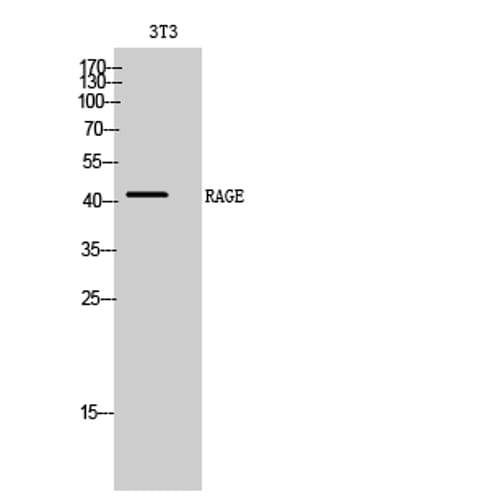
IMPORTANT NOTE This product is custom manufactured with a lead time of 3-4 weeks. Once in production, this item cannot be cancelled from an order and is not eligible for return. Target Protein RAGE Clonality Polyclonal Storage/Stability -20°C/1 year Application WB,IHC-p,ELISA Recommended Dilution Western Blot: 1/500 - 1/2000. Immunohistochemistry: 1/100 - 1/300. ELISA: 1/20000. Not yet tested in other applications. Concentration 1 mg/ml Reactive Species Human Host Species Rabbit Immunogen The antiserum was produced against synthesized peptide derived from human RAGE. AA range:133-182 Specificity RAGE Polyclonal Antibody detects endogenous levels of RAGE protein. Purification The antibody was affinity-purified from rabbit antiserum by affinity-chromatography using epitope-specific immunogen Form Liquid in PBS containing 50% glycerol, 0.5% BSA and 0.02% sodium azide. Gene Name AGER Accession No. Q15109 Q62151 Alternate Names AGER; RAGE; Advanced glycosylation end product-specific receptor; Receptor for advanced glycosylation end products Description advanced glycosylation end-product specific receptor(AGER) Homo sapiens The advanced glycosylation end product (AGE) receptor encoded by this gene is a member of the immunoglobulin superfamily of cell surface receptors. It is a multiligand receptor, and besides AGE, interacts with other molecules implicated in homeostasis, development, and inflammation, and certain diseases, such as diabetes and Alzheimer's disease. Many alternatively spliced transcript variants encoding different isoforms, as well as non-protein-coding variants, have been described for this gene (PMID:18089847). [provided by RefSeq, May 2011], Protein Expression Breast cancer,Lipoma,Lung,Skin, Subcellular Localization extracellular region,plasma membrane,integral component of plasma membrane,integral component of membrane, Protein Function function:Mediates interactions of advanced glycosylation end products (AGE). These are nonenzymatically glycosylated proteins which accumulate in vascular tissue in aging and at an accelerated rate in diabetes. Receptor for amyloid beta peptide.,similarity:Contains 1 Ig-like V-type (immunoglobulin-like) domain.,similarity:Contains 2 Ig-like C2-type (immunoglobulin-like) domains.,tissue specificity:Endothelial cells., Usage For Research Use Only! Not for diagnostic or therapeutic procedures. - Reviews
| Antibody Specification | |
| Datasheet | |
| IMPORTANT NOTE | This product is custom manufactured with a lead time of 3-4 weeks. Once in production, this item cannot be cancelled from an order and is not eligible for return. |
| Target Protein | RAGE |
| Clonality | Polyclonal |
| Storage/Stability | -20°C/1 year |
| Application | WB,IHC-p,ELISA |
| Recommended Dilution | Western Blot: 1/500 - 1/2000. Immunohistochemistry: 1/100 - 1/300. ELISA: 1/20000. Not yet tested in other applications. |
| Concentration | 1 mg/ml |
| Reactive Species | Human |
| Host Species | Rabbit |
| Immunogen | The antiserum was produced against synthesized peptide derived from human RAGE. AA range:133-182 |
| Specificity | RAGE Polyclonal Antibody detects endogenous levels of RAGE protein. |
| Purification | The antibody was affinity-purified from rabbit antiserum by affinity-chromatography using epitope-specific immunogen |
| Form | Liquid in PBS containing 50% glycerol, 0.5% BSA and 0.02% sodium azide. |
| Gene Name | AGER |
| Accession No. | Q15109 Q62151 |
| Alternate Names | AGER; RAGE; Advanced glycosylation end product-specific receptor; Receptor for advanced glycosylation end products |
| Description | advanced glycosylation end-product specific receptor(AGER) Homo sapiens The advanced glycosylation end product (AGE) receptor encoded by this gene is a member of the immunoglobulin superfamily of cell surface receptors. It is a multiligand receptor, and besides AGE, interacts with other molecules implicated in homeostasis, development, and inflammation, and certain diseases, such as diabetes and Alzheimer's disease. Many alternatively spliced transcript variants encoding different isoforms, as well as non-protein-coding variants, have been described for this gene (PMID:18089847). [provided by RefSeq, May 2011], |
| Protein Expression | Breast cancer,Lipoma,Lung,Skin, |
| Subcellular Localization | extracellular region,plasma membrane,integral component of plasma membrane,integral component of membrane, |
| Protein Function | function:Mediates interactions of advanced glycosylation end products (AGE). These are nonenzymatically glycosylated proteins which accumulate in vascular tissue in aging and at an accelerated rate in diabetes. Receptor for amyloid beta peptide.,similarity:Contains 1 Ig-like V-type (immunoglobulin-like) domain.,similarity:Contains 2 Ig-like C2-type (immunoglobulin-like) domains.,tissue specificity:Endothelial cells., |
| Usage | For Research Use Only! Not for diagnostic or therapeutic procedures. |