

ITT4357
ITT4357
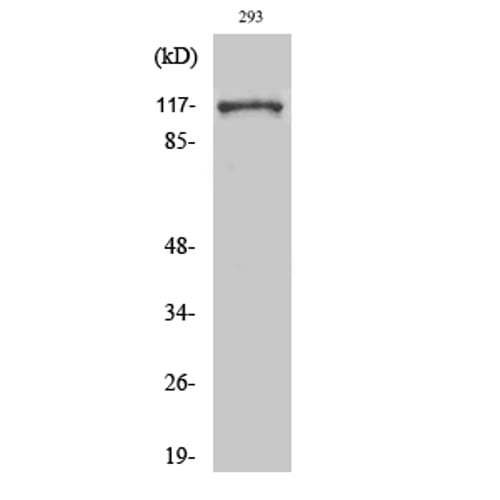
ITT4357
from
$424.00
Price in reward points: 424
- Catalog: ITT4357
- Gene/Protein: EFTUD2
- Product Description: Immunotag™ Snrp116 Polyclonal Antibody
-
Description
-
Specifications
Antibody Specification Datasheet 
IMPORTANT NOTE This product is custom manufactured with a lead time of 3-4 weeks. Once in production, this item cannot be cancelled from an order and is not eligible for return. Target Protein Snrp116 Clonality Polyclonal Storage/Stability -20°C/1 year Application WB,IHC-p,ELISA Recommended Dilution Western Blot: 1/500 - 1/2000. Immunohistochemistry: 1/100 - 1/300. ELISA: 1/40000. Not yet tested in other applications. Concentration 1 mg/ml Reactive Species Human,Mouse Host Species Rabbit Immunogen The antiserum was produced against synthesized peptide derived from human EFTUD2. AA range:321-370 Specificity Snrp116 Polyclonal Antibody detects endogenous levels of Snrp116 protein. Purification The antibody was affinity-purified from rabbit antiserum by affinity-chromatography using epitope-specific immunogen Form Liquid in PBS containing 50% glycerol, 0.5% BSA and 0.02% sodium azide. Gene Name EFTUD2 Accession No. Q15029 O08810 Alternate Names EFTUD2; KIAA0031; SNRP116; 116 kDa U5 small nuclear ribonucleoprotein component; Elongation factor Tu GTP-binding domain-containing protein 2; SNU114 homolog; hSNU114; U5 snRNP-specific protein; 116 kDa; U5-116 kDa Description elongation factor Tu GTP binding domain containing 2(EFTUD2) Homo sapiens This gene encodes a GTPase which is a component of the spliceosome complex which processes precursor mRNAs to produce mature mRNAs. Mutations in this gene are associated with mandibulofacial dysostosis with microcephaly. Multiple transcript variants encoding different isoforms have been found for this gene. [provided by RefSeq, Apr 2012], Cell Pathway/ Category Spliceosome, Protein Expression Bone marrow,Epithelium,Muscle,Thalamus,Uterus, Subcellular Localization nucleoplasm,spliceosomal complex,cytoplasm,Cajal body,membrane,nuclear speck,viral nucleocapsid,intracellular ribonucleoprotein complex,extracellular matrix,catalytic step 2 spliceosome, Protein Function function:Component of the U5 snRNP complex required for pre-mRNA splicing.,PTM:Phosphorylated upon DNA damage, probably by ATM or ATR.,similarity:Belongs to the GTP-binding elongation factor family. EF-G/EF-2 subfamily.,subunit:Identified in the spliceosome C complex, at least composed of AQR, ASCC3L1, C19orf29, CDC40, CDC5L, CRNKL1, DDX23, DDX41, DDX48, DDX5, DGCR14, DHX35, DHX38, DHX8, EFTUD2, FRG1, GPATC1, HNRPA1, HNRPA2B1, HNRPA3, HNRPC, HNRPF, HNRPH1, HNRPK, HNRPM, HNRPR, HNRPU, KIAA1160, KIAA1604, LSM2, LSM3, MAGOH, MORG1, PABPC1, PLRG1, PNN, PPIE, PPIL1, PPIL3, PPWD1, PRPF19, PRPF4B, PRPF6, PRPF8, RALY, RBM22, RBM8A, RBMX, SART1, SF3A1, SF3A2, SF3A3, SF3B1, SF3B2, SF3B3, SFRS1, SKIV2L2, SNRPA1, SNRPB, SNRPB2, SNRPD1, SNRPD2, SNRPD3, SNRPE, SNRPF, SNRPG, SNW1, SRRM1, SRRM2, SYF2, SYNCRIP, TFIP11, THOC4, U2AF1, WDR57, XAB2 and ZCCHC8. Binds GTP. Interacts with PRPF8., Usage For Research Use Only! Not for diagnostic or therapeutic procedures. - Reviews
| Antibody Specification | |
| Datasheet | |
| IMPORTANT NOTE | This product is custom manufactured with a lead time of 3-4 weeks. Once in production, this item cannot be cancelled from an order and is not eligible for return. |
| Target Protein | Snrp116 |
| Clonality | Polyclonal |
| Storage/Stability | -20°C/1 year |
| Application | WB,IHC-p,ELISA |
| Recommended Dilution | Western Blot: 1/500 - 1/2000. Immunohistochemistry: 1/100 - 1/300. ELISA: 1/40000. Not yet tested in other applications. |
| Concentration | 1 mg/ml |
| Reactive Species | Human,Mouse |
| Host Species | Rabbit |
| Immunogen | The antiserum was produced against synthesized peptide derived from human EFTUD2. AA range:321-370 |
| Specificity | Snrp116 Polyclonal Antibody detects endogenous levels of Snrp116 protein. |
| Purification | The antibody was affinity-purified from rabbit antiserum by affinity-chromatography using epitope-specific immunogen |
| Form | Liquid in PBS containing 50% glycerol, 0.5% BSA and 0.02% sodium azide. |
| Gene Name | EFTUD2 |
| Accession No. | Q15029 O08810 |
| Alternate Names | EFTUD2; KIAA0031; SNRP116; 116 kDa U5 small nuclear ribonucleoprotein component; Elongation factor Tu GTP-binding domain-containing protein 2; SNU114 homolog; hSNU114; U5 snRNP-specific protein; 116 kDa; U5-116 kDa |
| Description | elongation factor Tu GTP binding domain containing 2(EFTUD2) Homo sapiens This gene encodes a GTPase which is a component of the spliceosome complex which processes precursor mRNAs to produce mature mRNAs. Mutations in this gene are associated with mandibulofacial dysostosis with microcephaly. Multiple transcript variants encoding different isoforms have been found for this gene. [provided by RefSeq, Apr 2012], |
| Cell Pathway/ Category | Spliceosome, |
| Protein Expression | Bone marrow,Epithelium,Muscle,Thalamus,Uterus, |
| Subcellular Localization | nucleoplasm,spliceosomal complex,cytoplasm,Cajal body,membrane,nuclear speck,viral nucleocapsid,intracellular ribonucleoprotein complex,extracellular matrix,catalytic step 2 spliceosome, |
| Protein Function | function:Component of the U5 snRNP complex required for pre-mRNA splicing.,PTM:Phosphorylated upon DNA damage, probably by ATM or ATR.,similarity:Belongs to the GTP-binding elongation factor family. EF-G/EF-2 subfamily.,subunit:Identified in the spliceosome C complex, at least composed of AQR, ASCC3L1, C19orf29, CDC40, CDC5L, CRNKL1, DDX23, DDX41, DDX48, DDX5, DGCR14, DHX35, DHX38, DHX8, EFTUD2, FRG1, GPATC1, HNRPA1, HNRPA2B1, HNRPA3, HNRPC, HNRPF, HNRPH1, HNRPK, HNRPM, HNRPR, HNRPU, KIAA1160, KIAA1604, LSM2, LSM3, MAGOH, MORG1, PABPC1, PLRG1, PNN, PPIE, PPIL1, PPIL3, PPWD1, PRPF19, PRPF4B, PRPF6, PRPF8, RALY, RBM22, RBM8A, RBMX, SART1, SF3A1, SF3A2, SF3A3, SF3B1, SF3B2, SF3B3, SFRS1, SKIV2L2, SNRPA1, SNRPB, SNRPB2, SNRPD1, SNRPD2, SNRPD3, SNRPE, SNRPF, SNRPG, SNW1, SRRM1, SRRM2, SYF2, SYNCRIP, TFIP11, THOC4, U2AF1, WDR57, XAB2 and ZCCHC8. Binds GTP. Interacts with PRPF8., |
| Usage | For Research Use Only! Not for diagnostic or therapeutic procedures. |