

ITT4653
ITT4653
ITT4653
from
$424.00
Price in reward points: 424
- Catalog: ITT4653
- Gene/Protein: KLF11
- Product Description: Immunotag™ TIEG2 Polyclonal Antibody
-
Description
-
Specifications
Antibody Specification Datasheet 
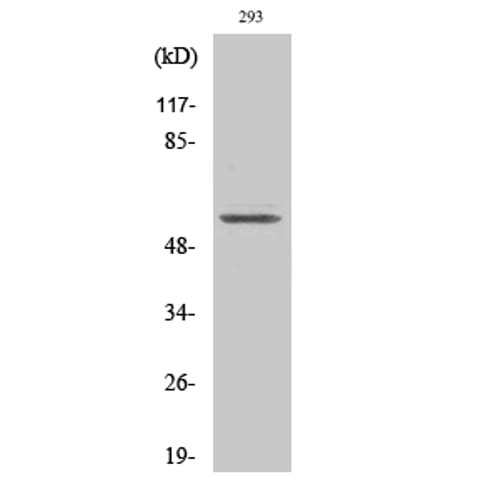
IMPORTANT NOTE This product is custom manufactured with a lead time of 3-4 weeks. Once in production, this item cannot be cancelled from an order and is not eligible for return. Target Protein TIEG2 Clonality Polyclonal Storage/Stability -20°C/1 year Application WB,IHC-p,IF,ELISA Recommended Dilution Western Blot: 1/500 - 1/2000. Immunohistochemistry: 1/100 - 1/300. Immunofluorescence: 1/200 - 1/1000. ELISA: 1/20000. Not yet tested in other applications. Concentration 1 mg/ml Reactive Species Human,Mouse Host Species Rabbit Immunogen The antiserum was produced against synthesized peptide derived from human KLF11. AA range:1-50 Specificity TIEG2 Polyclonal Antibody detects endogenous levels of TIEG2 protein. Purification The antibody was affinity-purified from rabbit antiserum by affinity-chromatography using epitope-specific immunogen Form Liquid in PBS containing 50% glycerol, 0.5% BSA and 0.02% sodium azide. Gene Name KLF11 Accession No. O14901 Q8K1S5 Alternate Names KLF11; FKLF; TIEG2; Krueppel-like factor 11; Transforming growth factor-beta-inducible early growth response protein 2; TGFB-inducible early growth response protein 2; TIEG-2 Description Kruppel like factor 11(KLF11) Homo sapiens The protein encoded by this gene is a zinc finger transcription factor that binds to SP1-like sequences in epsilon- and gamma-globin gene promoters. This binding inhibits cell growth and causes apoptosis. Defects in this gene are a cause of maturity-onset diabetes of the young type 7 (MODY7). Three transcript variants encoding two different isoforms have been found for this gene. [provided by RefSeq, Apr 2010], Protein Expression Brain,Erythroid cell,Hepatoma,Pancreas,Placenta, Subcellular Localization nucleus, Protein Function caution:PubMed:11087666 sequence was originally thought to originate from mouse.,disease:Defects in KLF11 are the cause of maturity-onset diabetes of the young type 7 (MODY7) [MIM:610508]. MODY [MIM:606391] has an autosomal dominant inheritance, onset at age less than 25 years and a primary defect in insulin secretion. MODY pedigrees are usually multigenerational families with penetrance of 80 to 95%. Patients have a nonobese body habitus and the so-called metabolic syndrome characterized by diabetes, insulin resistance, hypertension, and hypertriglyceridemia is absent.,function:Transcription factor. Activates the epsilon- and gamma-globin gene promoters and, to a much lower degree, the beta-globin gene and represses promoters containing SP1-like binding inhibiting cell growth. Represses transcription of SMAD7 which enhances TGF-beta signaling. Induces apoptosis.,induction:By TGF-beta.,similarity:Belongs to the Sp1 C2H2-type zinc-finger protein family.,similarity:Contains 3 C2H2-type zinc fingers.,tissue specificity:Ubiquitous. Higher expression in erythroid cells., Usage For Research Use Only! Not for diagnostic or therapeutic procedures. - Reviews
| Antibody Specification | |
| Datasheet | |
| IMPORTANT NOTE | This product is custom manufactured with a lead time of 3-4 weeks. Once in production, this item cannot be cancelled from an order and is not eligible for return. |
| Target Protein | TIEG2 |
| Clonality | Polyclonal |
| Storage/Stability | -20°C/1 year |
| Application | WB,IHC-p,IF,ELISA |
| Recommended Dilution | Western Blot: 1/500 - 1/2000. Immunohistochemistry: 1/100 - 1/300. Immunofluorescence: 1/200 - 1/1000. ELISA: 1/20000. Not yet tested in other applications. |
| Concentration | 1 mg/ml |
| Reactive Species | Human,Mouse |
| Host Species | Rabbit |
| Immunogen | The antiserum was produced against synthesized peptide derived from human KLF11. AA range:1-50 |
| Specificity | TIEG2 Polyclonal Antibody detects endogenous levels of TIEG2 protein. |
| Purification | The antibody was affinity-purified from rabbit antiserum by affinity-chromatography using epitope-specific immunogen |
| Form | Liquid in PBS containing 50% glycerol, 0.5% BSA and 0.02% sodium azide. |
| Gene Name | KLF11 |
| Accession No. | O14901 Q8K1S5 |
| Alternate Names | KLF11; FKLF; TIEG2; Krueppel-like factor 11; Transforming growth factor-beta-inducible early growth response protein 2; TGFB-inducible early growth response protein 2; TIEG-2 |
| Description | Kruppel like factor 11(KLF11) Homo sapiens The protein encoded by this gene is a zinc finger transcription factor that binds to SP1-like sequences in epsilon- and gamma-globin gene promoters. This binding inhibits cell growth and causes apoptosis. Defects in this gene are a cause of maturity-onset diabetes of the young type 7 (MODY7). Three transcript variants encoding two different isoforms have been found for this gene. [provided by RefSeq, Apr 2010], |
| Protein Expression | Brain,Erythroid cell,Hepatoma,Pancreas,Placenta, |
| Subcellular Localization | nucleus, |
| Protein Function | caution:PubMed:11087666 sequence was originally thought to originate from mouse.,disease:Defects in KLF11 are the cause of maturity-onset diabetes of the young type 7 (MODY7) [MIM:610508]. MODY [MIM:606391] has an autosomal dominant inheritance, onset at age less than 25 years and a primary defect in insulin secretion. MODY pedigrees are usually multigenerational families with penetrance of 80 to 95%. Patients have a nonobese body habitus and the so-called metabolic syndrome characterized by diabetes, insulin resistance, hypertension, and hypertriglyceridemia is absent.,function:Transcription factor. Activates the epsilon- and gamma-globin gene promoters and, to a much lower degree, the beta-globin gene and represses promoters containing SP1-like binding inhibiting cell growth. Represses transcription of SMAD7 which enhances TGF-beta signaling. Induces apoptosis.,induction:By TGF-beta.,similarity:Belongs to the Sp1 C2H2-type zinc-finger protein family.,similarity:Contains 3 C2H2-type zinc fingers.,tissue specificity:Ubiquitous. Higher expression in erythroid cells., |
| Usage | For Research Use Only! Not for diagnostic or therapeutic procedures. |