

ITT5103
ITT5103
ITT5103
from
$424.00
Price in reward points: 424
- Catalog: ITT5103
- Gene/Protein: SLC8A1
- Product Description: Immunotag™ NCX1 Polyclonal Antibody
-
Description
-
Specifications
Antibody Specification Datasheet 
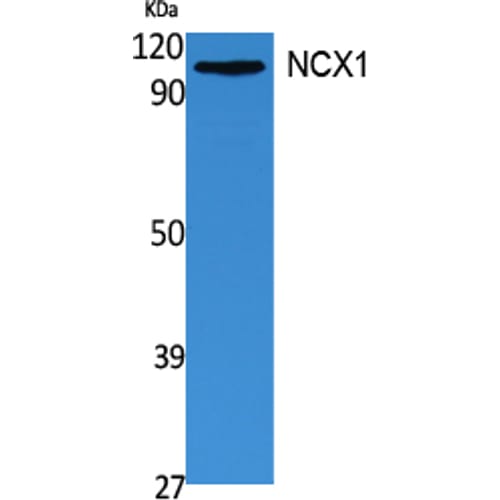
IMPORTANT NOTE This product is custom manufactured with a lead time of 3-4 weeks. Once in production, this item cannot be cancelled from an order and is not eligible for return. Target Protein NCX1 Clonality Polyclonal Storage/Stability -20°C/1 year Application WB,ELISA Recommended Dilution Western Blot: 1/500 - 1/2000. ELISA: 1/5000. Not yet tested in other applications. Concentration 1 mg/ml Reactive Species Human,Mouse,Rat Host Species Rabbit Immunogen Synthesized peptide derived from NCX1, at AA range: 270-350 Specificity NCX1 Polyclonal Antibody detects endogenous levels of NCX1 protein. Purification The antibody was affinity-purified from rabbit antiserum by affinity-chromatography using epitope-specific immunogen Form Liquid in PBS containing 50% glycerol, 0.5% BSA and 0.02% sodium azide. Gene Name SLC8A1 Accession No. P32418 P70414 Q01728 Alternate Names SLC8A1; CNC; NCX1; Sodium/calcium exchanger 1; Na(+)/Ca(2+)-exchange protein 1 Description solute carrier family 8 member A1(SLC8A1) Homo sapiens In cardiac myocytes, Ca(2+) concentrations alternate between high levels during contraction and low levels during relaxation. The increase in Ca(2+) concentration during contraction is primarily due to release of Ca(2+) from intracellular stores. However, some Ca(2+) also enters the cell through the sarcolemma (plasma membrane). During relaxation, Ca(2+) is sequestered within the intracellular stores. To prevent overloading of intracellular stores, the Ca(2+) that entered across the sarcolemma must be extruded from the cell. The Na(+)-Ca(2+) exchanger is the primary mechanism by which the Ca(2+) is extruded from the cell during relaxation. In the heart, the exchanger may play a key role in digitalis action. The exchanger is the dominant mechanism in returning the cardiac myocyte to its resting state following excitation.[supplied by OMIM, Apr 2004], Cell Pathway/ Category Calcium,Cardiac muscle contraction,Hypertrophic cardiomyopathy (HCM),Arrhythmogenic right ventricular cardiomyopathy (ARVC),Dilated cardiomyopathy, Protein Expression Airway smooth muscle,Brain,Heart,Liver,PCR rescued clones,Placenta, Subcellular Localization mitochondrion,microtubule,plasma membrane,integral component of plasma membrane,intercalated disc,membrane,integral component of membrane,Z disc,T-tubule,sarcolemma,dendritic spine,dendritic shaft, Protein Function Additional isoforms seem to exist,enzyme regulation:By ATP.,function:Rapidly transports Ca(2+) during excitation-contraction coupling. Ca(2+) is extruded from the cell during relaxation so as to prevent overloading of intracellular stores.,similarity:Belongs to the sodium/potassium/calcium exchanger family. SLC8 subfamily.,similarity:Contains 2 Calx-beta domains.,tissue specificity:Cardiac sarcolemma., Usage For Research Use Only! Not for diagnostic or therapeutic procedures. - Reviews
| Antibody Specification | |
| Datasheet | |
| IMPORTANT NOTE | This product is custom manufactured with a lead time of 3-4 weeks. Once in production, this item cannot be cancelled from an order and is not eligible for return. |
| Target Protein | NCX1 |
| Clonality | Polyclonal |
| Storage/Stability | -20°C/1 year |
| Application | WB,ELISA |
| Recommended Dilution | Western Blot: 1/500 - 1/2000. ELISA: 1/5000. Not yet tested in other applications. |
| Concentration | 1 mg/ml |
| Reactive Species | Human,Mouse,Rat |
| Host Species | Rabbit |
| Immunogen | Synthesized peptide derived from NCX1, at AA range: 270-350 |
| Specificity | NCX1 Polyclonal Antibody detects endogenous levels of NCX1 protein. |
| Purification | The antibody was affinity-purified from rabbit antiserum by affinity-chromatography using epitope-specific immunogen |
| Form | Liquid in PBS containing 50% glycerol, 0.5% BSA and 0.02% sodium azide. |
| Gene Name | SLC8A1 |
| Accession No. | P32418 P70414 Q01728 |
| Alternate Names | SLC8A1; CNC; NCX1; Sodium/calcium exchanger 1; Na(+)/Ca(2+)-exchange protein 1 |
| Description | solute carrier family 8 member A1(SLC8A1) Homo sapiens In cardiac myocytes, Ca(2+) concentrations alternate between high levels during contraction and low levels during relaxation. The increase in Ca(2+) concentration during contraction is primarily due to release of Ca(2+) from intracellular stores. However, some Ca(2+) also enters the cell through the sarcolemma (plasma membrane). During relaxation, Ca(2+) is sequestered within the intracellular stores. To prevent overloading of intracellular stores, the Ca(2+) that entered across the sarcolemma must be extruded from the cell. The Na(+)-Ca(2+) exchanger is the primary mechanism by which the Ca(2+) is extruded from the cell during relaxation. In the heart, the exchanger may play a key role in digitalis action. The exchanger is the dominant mechanism in returning the cardiac myocyte to its resting state following excitation.[supplied by OMIM, Apr 2004], |
| Cell Pathway/ Category | Calcium,Cardiac muscle contraction,Hypertrophic cardiomyopathy (HCM),Arrhythmogenic right ventricular cardiomyopathy (ARVC),Dilated cardiomyopathy, |
| Protein Expression | Airway smooth muscle,Brain,Heart,Liver,PCR rescued clones,Placenta, |
| Subcellular Localization | mitochondrion,microtubule,plasma membrane,integral component of plasma membrane,intercalated disc,membrane,integral component of membrane,Z disc,T-tubule,sarcolemma,dendritic spine,dendritic shaft, |
| Protein Function | Additional isoforms seem to exist,enzyme regulation:By ATP.,function:Rapidly transports Ca(2+) during excitation-contraction coupling. Ca(2+) is extruded from the cell during relaxation so as to prevent overloading of intracellular stores.,similarity:Belongs to the sodium/potassium/calcium exchanger family. SLC8 subfamily.,similarity:Contains 2 Calx-beta domains.,tissue specificity:Cardiac sarcolemma., |
| Usage | For Research Use Only! Not for diagnostic or therapeutic procedures. |