

ITT5438
ITT5438
ITT5438
from
$424.00
Price in reward points: 424
- Catalog: ITT5438
- Gene/Protein: GPR87
- Product Description: Immunotag™ GPR87/95 Polyclonal Antibody
-
Description
-
Specifications
Antibody Specification Datasheet 
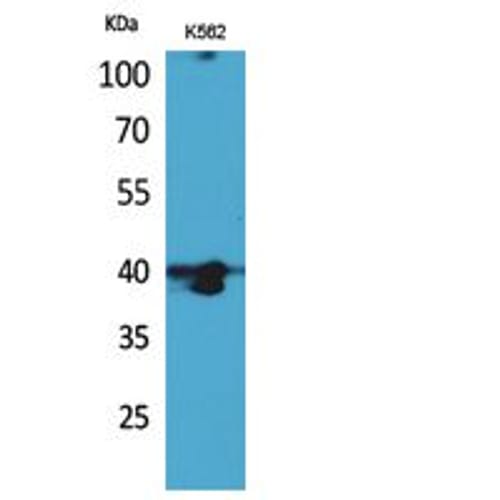
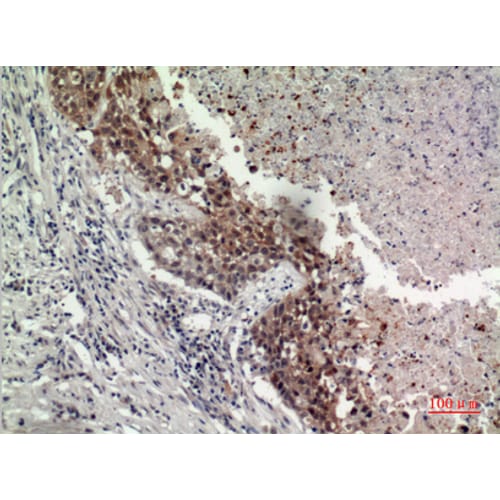
IMPORTANT NOTE This product is custom manufactured with a lead time of 3-4 weeks. Once in production, this item cannot be cancelled from an order and is not eligible for return. Target Protein GPR87/95 Clonality Polyclonal Storage/Stability -20°C/1 year Application WB,IHC-p,ELISA Recommended Dilution Western Blot: 1/500 - 1/2000. IHC-p: 1/100-1/300. ELISA: 1/20000. Not yet tested in other applications. Concentration 1 mg/ml Reactive Species Human Host Species Rabbit Immunogen The antiserum was produced against synthesized peptide derived from the N-terminal region of human GPR87. AA range:1-50 Specificity GPR87/95 Polyclonal Antibody detects endogenous levels of GPR87/95 protein. Purification The antibody was affinity-purified from rabbit antiserum by affinity-chromatography using epitope-specific immunogen Form Liquid in PBS containing 50% glycerol, 0.5% BSA and 0.02% sodium azide. Gene Name GPR87 Accession No. Q9BY21 Q99MT7 Alternate Names GPR87; GPR95; FKSG78; G-protein coupled receptor 87; G-protein coupled receptor 95 Description G protein-coupled receptor 87(GPR87) Homo sapiens This gene encodes a G protein-coupled receptor and is located in a cluster of G protein-couple receptor genes on chromosome 3. The encoded protein has been shown to be overexpressed in lung squamous cell carcinoma (PMID:18057535) and regulated by p53 (PMID:19602589). [provided by RefSeq, Nov 2011], Protein Expression Bladder,Heart,Lung,Placenta,Testes,Testis, Subcellular Localization integral component of plasma membrane, Protein Function function:Orphan receptor.,similarity:Belongs to the G-protein coupled receptor 1 family.,tissue specificity:Expressed in placenta and prostate. Weaker expression in thymus. Not expressed in thalamus, hippocampus, pons or cerebellum., Usage For Research Use Only! Not for diagnostic or therapeutic procedures. - Reviews
| Antibody Specification | |
| Datasheet | |
| IMPORTANT NOTE | This product is custom manufactured with a lead time of 3-4 weeks. Once in production, this item cannot be cancelled from an order and is not eligible for return. |
| Target Protein | GPR87/95 |
| Clonality | Polyclonal |
| Storage/Stability | -20°C/1 year |
| Application | WB,IHC-p,ELISA |
| Recommended Dilution | Western Blot: 1/500 - 1/2000. IHC-p: 1/100-1/300. ELISA: 1/20000. Not yet tested in other applications. |
| Concentration | 1 mg/ml |
| Reactive Species | Human |
| Host Species | Rabbit |
| Immunogen | The antiserum was produced against synthesized peptide derived from the N-terminal region of human GPR87. AA range:1-50 |
| Specificity | GPR87/95 Polyclonal Antibody detects endogenous levels of GPR87/95 protein. |
| Purification | The antibody was affinity-purified from rabbit antiserum by affinity-chromatography using epitope-specific immunogen |
| Form | Liquid in PBS containing 50% glycerol, 0.5% BSA and 0.02% sodium azide. |
| Gene Name | GPR87 |
| Accession No. | Q9BY21 Q99MT7 |
| Alternate Names | GPR87; GPR95; FKSG78; G-protein coupled receptor 87; G-protein coupled receptor 95 |
| Description | G protein-coupled receptor 87(GPR87) Homo sapiens This gene encodes a G protein-coupled receptor and is located in a cluster of G protein-couple receptor genes on chromosome 3. The encoded protein has been shown to be overexpressed in lung squamous cell carcinoma (PMID:18057535) and regulated by p53 (PMID:19602589). [provided by RefSeq, Nov 2011], |
| Protein Expression | Bladder,Heart,Lung,Placenta,Testes,Testis, |
| Subcellular Localization | integral component of plasma membrane, |
| Protein Function | function:Orphan receptor.,similarity:Belongs to the G-protein coupled receptor 1 family.,tissue specificity:Expressed in placenta and prostate. Weaker expression in thymus. Not expressed in thalamus, hippocampus, pons or cerebellum., |
| Usage | For Research Use Only! Not for diagnostic or therapeutic procedures. |