

ITT5591
ITT5591
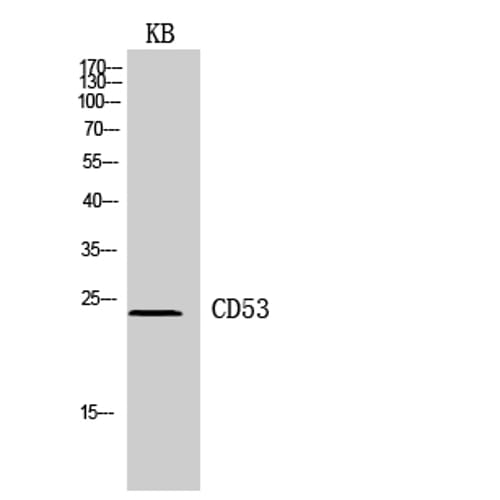
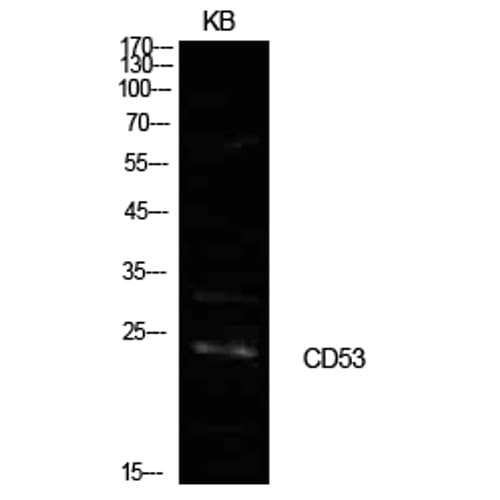
ITT5591
from
$424.00
Price in reward points: 424
- Catalog: ITT5591
- Gene/Protein: CD53
- Product Description: Immunotag™ CD53 Polyclonal Antibody
-
Description
-
Specifications
Antibody Specification Datasheet 
IMPORTANT NOTE This product is custom manufactured with a lead time of 3-4 weeks. Once in production, this item cannot be cancelled from an order and is not eligible for return. Target Protein CD53 Clonality Polyclonal Storage/Stability -20°C/1 year Application WB,ELISA Recommended Dilution Western Blot: 1/500 - 1/2000. ELISA: 1/10000. Not yet tested in other applications. Concentration 1 mg/ml Reactive Species Human,Mouse,Rat Host Species Rabbit Immunogen Synthesized peptide derived from Leukocyte surface antigen CD53 at AA range: 91-140 Specificity CD53 Polyclonal Antibody detects endogenous levels of CD53 protein. Purification The antibody was affinity-purified from rabbit antiserum by affinity-chromatography using epitope-specific immunogen Form Liquid in PBS containing 50% glycerol, 0.5% BSA and 0.02% sodium azide. Gene Name CD53 Accession No. P19397 Q61451 P24485 Alternate Names CD53; MOX44; TSPAN25; Leukocyte surface antigen CD53; Cell surface glycoprotein CD53; Tetraspanin-25; Tspan-25; CD53 Description CD53 molecule(CD53) Homo sapiens The protein encoded by this gene is a member of the transmembrane 4 superfamily, also known as the tetraspanin family. Most of these members are cell-surface proteins that are characterized by the presence of four hydrophobic domains. The proteins mediate signal transduction events that play a role in the regulation of cell development, activation, growth and motility. This encoded protein is a cell surface glycoprotein that is known to complex with integrins. It contributes to the transduction of CD2-generated signals in T cells and natural killer cells and has been suggested to play a role in growth regulation. Familial deficiency of this gene has been linked to an immunodeficiency associated with recurrent infectious diseases caused by bacteria, fungi and viruses. Alternative splicing results in multiple transcript variants. [provided by RefSeq, Mar 2016], Protein Expression Lymph, Subcellular Localization immunological synapse,plasma membrane,integral component of plasma membrane,cell-cell junction,cell surface,integral component of membrane,extracellular exosome, Protein Function function:May be involved in growth regulation in hematopoietic cells.,similarity:Belongs to the tetraspanin (TM4SF) family.,tissue specificity:B-cells, monocytes, macrophages, neutrophils, single (CD4 or CD8) positive thymocytes and peripheral T-cells., Usage For Research Use Only! Not for diagnostic or therapeutic procedures. - Reviews
| Antibody Specification | |
| Datasheet | |
| IMPORTANT NOTE | This product is custom manufactured with a lead time of 3-4 weeks. Once in production, this item cannot be cancelled from an order and is not eligible for return. |
| Target Protein | CD53 |
| Clonality | Polyclonal |
| Storage/Stability | -20°C/1 year |
| Application | WB,ELISA |
| Recommended Dilution | Western Blot: 1/500 - 1/2000. ELISA: 1/10000. Not yet tested in other applications. |
| Concentration | 1 mg/ml |
| Reactive Species | Human,Mouse,Rat |
| Host Species | Rabbit |
| Immunogen | Synthesized peptide derived from Leukocyte surface antigen CD53 at AA range: 91-140 |
| Specificity | CD53 Polyclonal Antibody detects endogenous levels of CD53 protein. |
| Purification | The antibody was affinity-purified from rabbit antiserum by affinity-chromatography using epitope-specific immunogen |
| Form | Liquid in PBS containing 50% glycerol, 0.5% BSA and 0.02% sodium azide. |
| Gene Name | CD53 |
| Accession No. | P19397 Q61451 P24485 |
| Alternate Names | CD53; MOX44; TSPAN25; Leukocyte surface antigen CD53; Cell surface glycoprotein CD53; Tetraspanin-25; Tspan-25; CD53 |
| Description | CD53 molecule(CD53) Homo sapiens The protein encoded by this gene is a member of the transmembrane 4 superfamily, also known as the tetraspanin family. Most of these members are cell-surface proteins that are characterized by the presence of four hydrophobic domains. The proteins mediate signal transduction events that play a role in the regulation of cell development, activation, growth and motility. This encoded protein is a cell surface glycoprotein that is known to complex with integrins. It contributes to the transduction of CD2-generated signals in T cells and natural killer cells and has been suggested to play a role in growth regulation. Familial deficiency of this gene has been linked to an immunodeficiency associated with recurrent infectious diseases caused by bacteria, fungi and viruses. Alternative splicing results in multiple transcript variants. [provided by RefSeq, Mar 2016], |
| Protein Expression | Lymph, |
| Subcellular Localization | immunological synapse,plasma membrane,integral component of plasma membrane,cell-cell junction,cell surface,integral component of membrane,extracellular exosome, |
| Protein Function | function:May be involved in growth regulation in hematopoietic cells.,similarity:Belongs to the tetraspanin (TM4SF) family.,tissue specificity:B-cells, monocytes, macrophages, neutrophils, single (CD4 or CD8) positive thymocytes and peripheral T-cells., |
| Usage | For Research Use Only! Not for diagnostic or therapeutic procedures. |