

ITT6075
ITT6075
ITT6075
from
$424.00
Price in reward points: 424
- Catalog: ITT6075
- Gene/Protein: PCNA
- Product Description: Immunotag™ PCNA Polyclonal Antibody
-
Description
-
Specifications
Antibody Specification Datasheet 
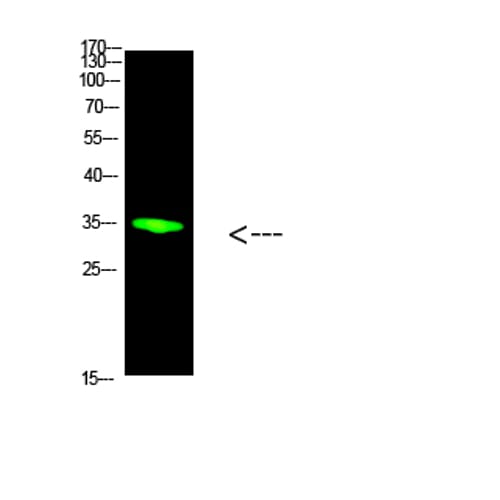
IMPORTANT NOTE This product is custom manufactured with a lead time of 3-4 weeks. Once in production, this item cannot be cancelled from an order and is not eligible for return. Target Protein PCNA Clonality Polyclonal Storage/Stability -20°C/1 year Application WB,ELISA Recommended Dilution WB 1:500-2000, ELISA 1:10000-20000 Concentration 1 mg/ml Reactive Species Human,Mouse,Rat Host Species Rabbit Immunogen Synthesized peptide derived from human PCNA. at AA range: Internal Specificity This antibody detects endogenous levels of PCNA Purification The antibody was affinity-purified from rabbit antiserum by affinity-chromatography using epitope-specific immunogen Form Liquid in PBS containing 50% glycerol, 0.5% BSA and 0.02% sodium azide. Gene Name PCNA Accession No. P12004 P17918 Alternate Names Proliferating cell nuclear antigen (PCNA) (Cyclin) Description proliferating cell nuclear antigen(PCNA) Homo sapiens The protein encoded by this gene is found in the nucleus and is a cofactor of DNA polymerase delta. The encoded protein acts as a homotrimer and helps increase the processivity of leading strand synthesis during DNA replication. In response to DNA damage, this protein is ubiquitinated and is involved in the RAD6-dependent DNA repair pathway. Two transcript variants encoding the same protein have been found for this gene. Pseudogenes of this gene have been described on chromosome 4 and on the X chromosome. [provided by RefSeq, Jul 2008], Cell Pathway/ Category DNA replication,Base excision repair,Nucleotide excision repair,Mismatch repair,Cell_Cycle_G1S,Cell_Cycle_G2M_DNA, Protein Expression Bone marrow,Fetal brain cortex,Lung,Placenta, Subcellular Localization nuclear chromosome, telomeric region,nucleus,nucleoplasm,replication fork,DNA replication factor C complex,cytoplasm,centrosome,replisome,nuclear replication fork,PCNA complex,extracellular exosome,PCNA-p21 compl Protein Function disease:Antibodies are present in sera from patients with systemic lupus erythematosus.,function:This protein is an auxiliary protein of DNA polymerase delta and is involved in the control of eukaryotic DNA replication by increasing the polymerase's processibility during elongation of the leading strand.,online information:PCNA entry,PTM:Upon methyl methanesulfonate-induced DNA damage, mono-ubiquitinated by the UBE2B-RAD18 complex on Lys-164. This induces non-canonical poly-ubiquitination on Lys-164 through 'Lys-63' linkage of ubiquitin moieties by the E2 complex UBE2N-UBE2V2 and the E3 ligases RNF8 and SHPRH, which are required for DNA repair.,similarity:Belongs to the PCNA family.,subunit:Homotrimer. Interacts with KCTD10. Interacts with PPP1R15A (By similarity). Forms a complex with activator 1 heteropentamer in the presence of ATP. Interacts with POLH, POLK, DNMT1, ERCC5/XPG, FEN1, CDC6, APEX2 and POLDIP2. Interacts with EXO1 and SHPRH. Forms a ternary complex with DNTTIP2 and core histone. Interacts with POLD1, POLD3 and POLD4. Interacts with BAZ1B/WSTF; the interaction is direct., Usage For Research Use Only! Not for diagnostic or therapeutic procedures. - Reviews
| Antibody Specification | |
| Datasheet | |
| IMPORTANT NOTE | This product is custom manufactured with a lead time of 3-4 weeks. Once in production, this item cannot be cancelled from an order and is not eligible for return. |
| Target Protein | PCNA |
| Clonality | Polyclonal |
| Storage/Stability | -20°C/1 year |
| Application | WB,ELISA |
| Recommended Dilution | WB 1:500-2000, ELISA 1:10000-20000 |
| Concentration | 1 mg/ml |
| Reactive Species | Human,Mouse,Rat |
| Host Species | Rabbit |
| Immunogen | Synthesized peptide derived from human PCNA. at AA range: Internal |
| Specificity | This antibody detects endogenous levels of PCNA |
| Purification | The antibody was affinity-purified from rabbit antiserum by affinity-chromatography using epitope-specific immunogen |
| Form | Liquid in PBS containing 50% glycerol, 0.5% BSA and 0.02% sodium azide. |
| Gene Name | PCNA |
| Accession No. | P12004 P17918 |
| Alternate Names | Proliferating cell nuclear antigen (PCNA) (Cyclin) |
| Description | proliferating cell nuclear antigen(PCNA) Homo sapiens The protein encoded by this gene is found in the nucleus and is a cofactor of DNA polymerase delta. The encoded protein acts as a homotrimer and helps increase the processivity of leading strand synthesis during DNA replication. In response to DNA damage, this protein is ubiquitinated and is involved in the RAD6-dependent DNA repair pathway. Two transcript variants encoding the same protein have been found for this gene. Pseudogenes of this gene have been described on chromosome 4 and on the X chromosome. [provided by RefSeq, Jul 2008], |
| Cell Pathway/ Category | DNA replication,Base excision repair,Nucleotide excision repair,Mismatch repair,Cell_Cycle_G1S,Cell_Cycle_G2M_DNA, |
| Protein Expression | Bone marrow,Fetal brain cortex,Lung,Placenta, |
| Subcellular Localization | nuclear chromosome, telomeric region,nucleus,nucleoplasm,replication fork,DNA replication factor C complex,cytoplasm,centrosome,replisome,nuclear replication fork,PCNA complex,extracellular exosome,PCNA-p21 compl |
| Protein Function | disease:Antibodies are present in sera from patients with systemic lupus erythematosus.,function:This protein is an auxiliary protein of DNA polymerase delta and is involved in the control of eukaryotic DNA replication by increasing the polymerase's processibility during elongation of the leading strand.,online information:PCNA entry,PTM:Upon methyl methanesulfonate-induced DNA damage, mono-ubiquitinated by the UBE2B-RAD18 complex on Lys-164. This induces non-canonical poly-ubiquitination on Lys-164 through 'Lys-63' linkage of ubiquitin moieties by the E2 complex UBE2N-UBE2V2 and the E3 ligases RNF8 and SHPRH, which are required for DNA repair.,similarity:Belongs to the PCNA family.,subunit:Homotrimer. Interacts with KCTD10. Interacts with PPP1R15A (By similarity). Forms a complex with activator 1 heteropentamer in the presence of ATP. Interacts with POLH, POLK, DNMT1, ERCC5/XPG, FEN1, CDC6, APEX2 and POLDIP2. Interacts with EXO1 and SHPRH. Forms a ternary complex with DNTTIP2 and core histone. Interacts with POLD1, POLD3 and POLD4. Interacts with BAZ1B/WSTF; the interaction is direct., |
| Usage | For Research Use Only! Not for diagnostic or therapeutic procedures. |