

ITA5170
ITA5170
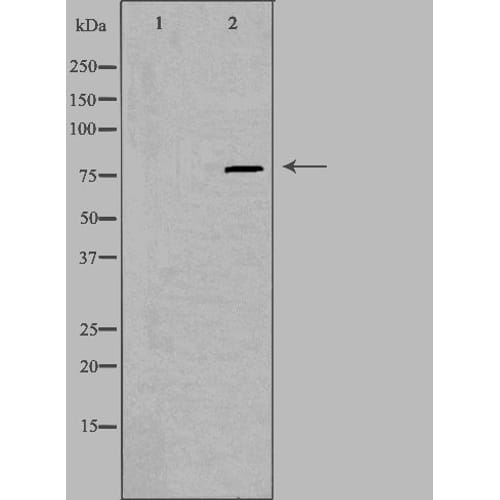
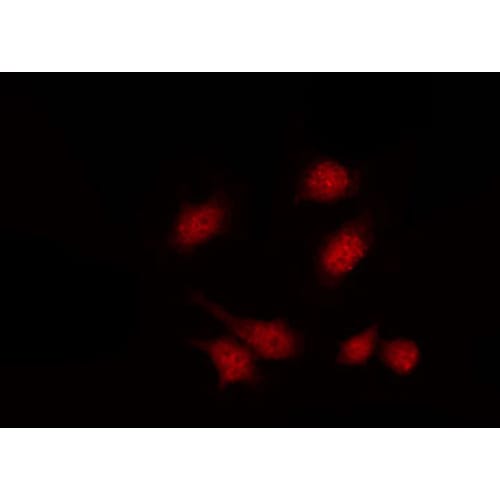
ITA5170
from
$526.00
Price in reward points: 526
- Catalog: ITA5170
- Gene/Protein: PIP5K1C
- Product Description: Immunotag™ PIP5K1C Antibody
-
Description
-
Specifications
Antibody Specification Datasheet 
IMPORTANT NOTE This product is custom manufactured with a lead time of 3-4 weeks. Once in production, this item cannot be cancelled from an order and is not eligible for return. Target Protein PIP5K1C Clonality Polyclonal Storage/Stability -20°C/1 year Application WB,IF/ICC,ELISA Recommended Dilution WB 1:500~1:1000, IF/ICC 1:100-1:500 Concentration 1 mg/ml Reactive Species Human Host Species Rabbit Immunogen A synthesized peptide Specificity PIP5K1C Antibody detects endogenous levels of total PIP5K1C Purification The antiserum was purified by peptide affinity chromatography. Form Rabbit IgG in phosphate buffered saline , pH 7.4, 150mM NaCl, 0.02% sodium azide and 50% glycerol.Store at -20 °C.Stable for 12 months from date of receipt Gene Name PIP5K1C Accession No. O60331 Alternate Names Diphosphoinositide kinase; LCCS3; Phosphatidylinositol-4-phosphate 5-kinase type I gamma; Phosphatidylinositol-4-phosphate 5-kinase type-1 gamma; PI51C; PI51C_HUMAN; PIP5K GAMMA; PIP5K1-gamma; Pip5k1c; PIP5KIgamma; PtdIns(4)P 5 kinase gamma; PtdIns(4)P-5-kinase 1 gamma; Type I PIP kinase; Description Catalyzes the phosphorylation of phosphatidylinositol 4-phosphate (PtdIns4P) to form phosphatidylinositol 4,5-bisphosphate (PtdIns(4,5)P2). PtdIns(4,5)P2 is involved in a variety of cellular processes and is the substrate to form phosphatidylinositol 3,4,5-trisphosphate (PtdIns(3,4,5)P3), another second messenger. The majority of PtdIns(4,5)P2 is thought to occur via type I phosphatidylinositol 4-phosphate 5-kinases given the abundance of PtdIns4P. Participates in a variety of cellular processes such as vesicle mediated transport, cell adhesion, cell polarization and cell migration. Together with PIP5K1A is required for phagocytosis, but they regulate different types of actin remodeling at sequential steps. Promotes particle attachment by generating the pool of PtdIns(4,5)P2 that induces controlled actin depolymerization to facilitate Fc-gamma-R clustering. Mediates RAC1-dependent reorganization of actin filaments. Required for synaptic vesicle transport. Controls the plasma membrane pool of PtdIns(4,5)P2 implicated in synaptic vesicle endocytosis and exocytosis. Plays a role in endocytosis mediated by clathrin and AP-2 (adaptor protein complex 2). Required for clathrin-coated pits assembly at the synapse. Participates in cell junction assembly. Modulates adherens junctions formation by facilitating CDH1 trafficking. Required for focal adhesion dynamics. Modulates the targeting of talins (TLN1 and TLN2) to the plasma membrane and their efficient assembly into focal adhesions. Regulates the interaction between talins (TLN1 and TLN2) and beta-integrins. Required for uropodium formation and retraction of the cell rear during directed migration. Has a role in growth factor- stimulated directional cell migration and adhesion. Required for talin assembly into nascent adhesions forming at the leading edge toward the direction of the growth factor. Negative regulator of T-cell activation and adhesion. Negatively regulates integrin alpha-L/beta-2 (LFA-1) polarization and adhesion induced by T-cell receptor. Together with PIP5K1A has a role during embryogenesis and together with PIP5K1B may have a role immediately after birth. Cell Pathway/ Category Primary Polyclonal Antibody Protein MW 80 KD Usage For Research Use Only! Not for diagnostic or therapeutic procedures. - Reviews
| Antibody Specification | |
| Datasheet |
|
| IMPORTANT NOTE | This product is custom manufactured with a lead time of 3-4 weeks. Once in production, this item cannot be cancelled from an order and is not eligible for return. |
| Target Protein | PIP5K1C |
| Clonality | Polyclonal |
| Storage/Stability | -20°C/1 year |
| Application | WB,IF/ICC,ELISA |
| Recommended Dilution | WB 1:500~1:1000, IF/ICC 1:100-1:500 |
| Concentration | 1 mg/ml |
| Reactive Species | Human |
| Host Species | Rabbit |
| Immunogen | A synthesized peptide |
| Specificity | PIP5K1C Antibody detects endogenous levels of total PIP5K1C |
| Purification | The antiserum was purified by peptide affinity chromatography. |
| Form | Rabbit IgG in phosphate buffered saline , pH 7.4, 150mM NaCl, 0.02% sodium azide and 50% glycerol.Store at -20 °C.Stable for 12 months from date of receipt |
| Gene Name | PIP5K1C |
| Accession No. | O60331 |
| Alternate Names | Diphosphoinositide kinase; LCCS3; Phosphatidylinositol-4-phosphate 5-kinase type I gamma; Phosphatidylinositol-4-phosphate 5-kinase type-1 gamma; PI51C; PI51C_HUMAN; PIP5K GAMMA; PIP5K1-gamma; Pip5k1c; PIP5KIgamma; PtdIns(4)P 5 kinase gamma; PtdIns(4)P-5-kinase 1 gamma; Type I PIP kinase; |
| Description | Catalyzes the phosphorylation of phosphatidylinositol 4-phosphate (PtdIns4P) to form phosphatidylinositol 4,5-bisphosphate (PtdIns(4,5)P2). PtdIns(4,5)P2 is involved in a variety of cellular processes and is the substrate to form phosphatidylinositol 3,4,5-trisphosphate (PtdIns(3,4,5)P3), another second messenger. The majority of PtdIns(4,5)P2 is thought to occur via type I phosphatidylinositol 4-phosphate 5-kinases given the abundance of PtdIns4P. Participates in a variety of cellular processes such as vesicle mediated transport, cell adhesion, cell polarization and cell migration. Together with PIP5K1A is required for phagocytosis, but they regulate different types of actin remodeling at sequential steps. Promotes particle attachment by generating the pool of PtdIns(4,5)P2 that induces controlled actin depolymerization to facilitate Fc-gamma-R clustering. Mediates RAC1-dependent reorganization of actin filaments. Required for synaptic vesicle transport. Controls the plasma membrane pool of PtdIns(4,5)P2 implicated in synaptic vesicle endocytosis and exocytosis. Plays a role in endocytosis mediated by clathrin and AP-2 (adaptor protein complex 2). Required for clathrin-coated pits assembly at the synapse. Participates in cell junction assembly. Modulates adherens junctions formation by facilitating CDH1 trafficking. Required for focal adhesion dynamics. Modulates the targeting of talins (TLN1 and TLN2) to the plasma membrane and their efficient assembly into focal adhesions. Regulates the interaction between talins (TLN1 and TLN2) and beta-integrins. Required for uropodium formation and retraction of the cell rear during directed migration. Has a role in growth factor- stimulated directional cell migration and adhesion. Required for talin assembly into nascent adhesions forming at the leading edge toward the direction of the growth factor. Negative regulator of T-cell activation and adhesion. Negatively regulates integrin alpha-L/beta-2 (LFA-1) polarization and adhesion induced by T-cell receptor. Together with PIP5K1A has a role during embryogenesis and together with PIP5K1B may have a role immediately after birth. |
| Cell Pathway/ Category | Primary Polyclonal Antibody |
| Protein MW | 80 KD |
| Usage | For Research Use Only! Not for diagnostic or therapeutic procedures. |