

ITT3120
ITT3120
ITT3120
from
$424.00
Price in reward points: 424
- Catalog: ITT3120
- Gene/Protein: SLC9A9
- Product Description: Immunotag™ NHE-9 Polyclonal Antibody
-
Description
-
Specifications
Antibody Specification Datasheet 
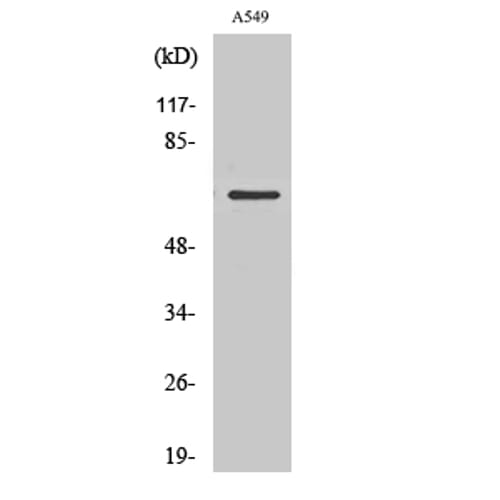
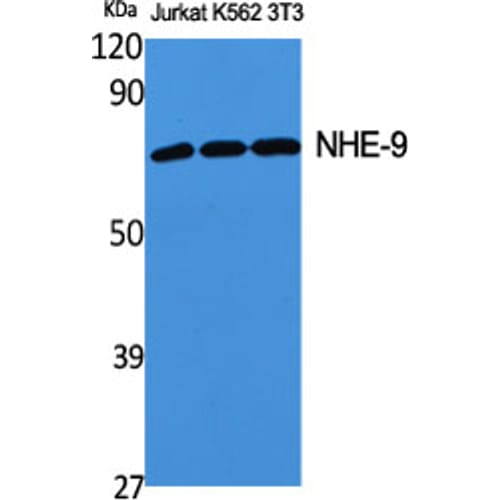
IMPORTANT NOTE This product is custom manufactured with a lead time of 3-4 weeks. Once in production, this item cannot be cancelled from an order and is not eligible for return. Target Protein NHE-9 Clonality Polyclonal Storage/Stability -20°C/1 year Application WB,ELISA Recommended Dilution Western Blot: 1/500 - 1/2000. ELISA: 1/40000. Not yet tested in other applications. Concentration 1 mg/ml Reactive Species Human,Mouse Host Species Rabbit Immunogen The antiserum was produced against synthesized peptide derived from human SLC9A9. AA range:171-220 Specificity NHE-9 Polyclonal Antibody detects endogenous levels of NHE-9 protein. Purification The antibody was affinity-purified from rabbit antiserum by affinity-chromatography using epitope-specific immunogen Form Liquid in PBS containing 50% glycerol, 0.5% BSA and 0.02% sodium azide. Gene Name SLC9A9 Accession No. Q8IVB4 Q8BZ00 Alternate Names SLC9A9; NHE9; Nbla00118; Sodium/hydrogen exchanger 9; Na(+)/H(+) exchanger 9; NHE-9; Solute carrier family 9 member 9 Description solute carrier family 9 member A9(SLC9A9) Homo sapiens This gene encodes a sodium/proton exchanger that is a member of the solute carrier 9 protein family. The encoded protein localizes the to the late recycling endosomes and may play an important role in maintaining cation homeostasis. Mutations in this gene are associated with autism susceptibility 16 and attention-deficit/hyperactivity disorder. [provided by RefSeq, Mar 2012], Protein Expression Liver,Lymph node,Neuroblastoma,Ovary,Spleen, Subcellular Localization plasma membrane,integral component of membrane,late endosome membrane,recycling endosome, Protein Function disease:A chromosomal aberration involving SLC9A9 may be a cause of early-onset behavioral/developmental disorder with features of attention deficit-hyperactivity disorder and intellectual disability (ADHD) [MIM:143465]. Inversion inv(3)(p14:q21). The inversion disrupts SLC9A9 and DOCK3.,function:May act in electroneutral exchange of protons for Na(+) across membranes. Involved in the effusion of Golgi luminal H(+) in exchange for cytosolic cations. Involved in organelle ion homeostasis by contributing to the maintainance of the unique acidic pH values of the Golgi and post-Golgi compartments in the cell.,similarity:Belongs to the monovalent cation:proton antiporter 1 (CPA1) transporter (TC 2.A.36) family.,tissue specificity:Ubiquitously expressed in all tissues tested. Expressed at highest levels in heart and skeletal muscle, followed by placenta, kidney, and liver. Expressed in the brain, in the medulla and spinal cord., Usage For Research Use Only! Not for diagnostic or therapeutic procedures. - Reviews
| Antibody Specification | |
| Datasheet | |
| IMPORTANT NOTE | This product is custom manufactured with a lead time of 3-4 weeks. Once in production, this item cannot be cancelled from an order and is not eligible for return. |
| Target Protein | NHE-9 |
| Clonality | Polyclonal |
| Storage/Stability | -20°C/1 year |
| Application | WB,ELISA |
| Recommended Dilution | Western Blot: 1/500 - 1/2000. ELISA: 1/40000. Not yet tested in other applications. |
| Concentration | 1 mg/ml |
| Reactive Species | Human,Mouse |
| Host Species | Rabbit |
| Immunogen | The antiserum was produced against synthesized peptide derived from human SLC9A9. AA range:171-220 |
| Specificity | NHE-9 Polyclonal Antibody detects endogenous levels of NHE-9 protein. |
| Purification | The antibody was affinity-purified from rabbit antiserum by affinity-chromatography using epitope-specific immunogen |
| Form | Liquid in PBS containing 50% glycerol, 0.5% BSA and 0.02% sodium azide. |
| Gene Name | SLC9A9 |
| Accession No. | Q8IVB4 Q8BZ00 |
| Alternate Names | SLC9A9; NHE9; Nbla00118; Sodium/hydrogen exchanger 9; Na(+)/H(+) exchanger 9; NHE-9; Solute carrier family 9 member 9 |
| Description | solute carrier family 9 member A9(SLC9A9) Homo sapiens This gene encodes a sodium/proton exchanger that is a member of the solute carrier 9 protein family. The encoded protein localizes the to the late recycling endosomes and may play an important role in maintaining cation homeostasis. Mutations in this gene are associated with autism susceptibility 16 and attention-deficit/hyperactivity disorder. [provided by RefSeq, Mar 2012], |
| Protein Expression | Liver,Lymph node,Neuroblastoma,Ovary,Spleen, |
| Subcellular Localization | plasma membrane,integral component of membrane,late endosome membrane,recycling endosome, |
| Protein Function | disease:A chromosomal aberration involving SLC9A9 may be a cause of early-onset behavioral/developmental disorder with features of attention deficit-hyperactivity disorder and intellectual disability (ADHD) [MIM:143465]. Inversion inv(3)(p14:q21). The inversion disrupts SLC9A9 and DOCK3.,function:May act in electroneutral exchange of protons for Na(+) across membranes. Involved in the effusion of Golgi luminal H(+) in exchange for cytosolic cations. Involved in organelle ion homeostasis by contributing to the maintainance of the unique acidic pH values of the Golgi and post-Golgi compartments in the cell.,similarity:Belongs to the monovalent cation:proton antiporter 1 (CPA1) transporter (TC 2.A.36) family.,tissue specificity:Ubiquitously expressed in all tissues tested. Expressed at highest levels in heart and skeletal muscle, followed by placenta, kidney, and liver. Expressed in the brain, in the medulla and spinal cord., |
| Usage | For Research Use Only! Not for diagnostic or therapeutic procedures. |